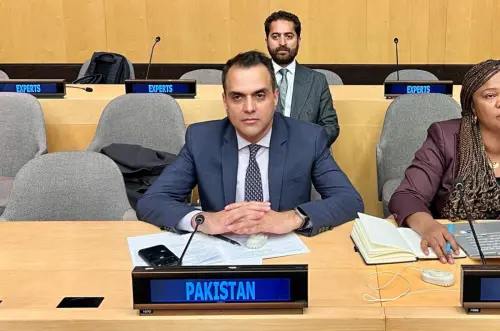
FINANCE Minister Muhammad Aurangzeb’s acknowledgement that Pakistan’s financial stability hinges on curbing militancy is a rare moment of candidness in our economic policy discourse. For too long, policymakers have refrained from admitting how militant violence and political instability drive away foreign investment. At a media briefing in Washington, Mr Aurangzeb stated that sustained economic development and investor confidence depended on domestic peace and political cohesion. “From a financial angle, this action [against militant groups] is necessary,” he said, underscoring a reality long known but rarely spoken of — Pakistan’s economic prospects are deeply intertwined with its ability to effectively curb militancy. During his weeklong visit to the US, the minister faced recurring questions from credit rating agencies, international bankers and institutional investors, who asked if Pakistan’s security environment had finally begun to align with its economic ambitions. The question was a valid one.
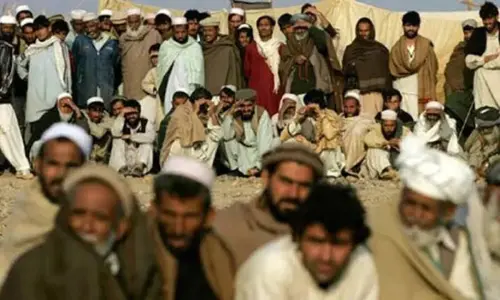
Security concerns have emerged as the biggest constraint to potential Chinese investment despite a friendship touted as ‘higher than the Himalayas and sweeter than honey’. The very fact that such worries weigh heavily on foreign investors shows how inseparable Pakistan’s image as an investment destination is with its domestic security landscape. No wonder, the interior minister often finds himself trying to reassure foreign investors of their protection amid terrorist violence. While terrorist attacks are reported from across the country, militant violence has particularly surged in KP and Balochistan. The numbers speak for themselves. In the third quarter — July to September — of this year, the numbers show how high violence has soared as compared to the previous quarter due to increasing militant attacks amid intensified counterterrorism operations. This year is on track to be deadlier than 2024, and is already the most violent one in a decade. The political polarisation referred to by Mr Aurangzeb, further complicates the environment needed for sustained investment and economic growth. Our long-term economic ambition and ability to attract foreign investors depends on restoring the authority of the state and tackling the root causes of militancy — not just through the use of kinetic force against extremists but also through engaging with disillusioned segments of the populace where possible, as well as establishing the rule of law. In short, domestic peace, governance and economic progress are interconnected and interdependent, and, therefore, must move together.
Published in Dawn, October 21st, 2025