One can notice a shift in the national debate on how to manage rising unsustainable foreign debt as more analysts call for restricting foreign loans for “projects with high development impact’ and directing investment in areas of ‘comparative advantage’. This is necessary to build on the macroeconomic stability achieved thus far.
A former senior International Monetary Fund (IMF) Pakistani official says “The approach of accepting whatever comes in, on whatever terms, must end. Multilateral concessional financing should support demand-driven projects with high development impact.”
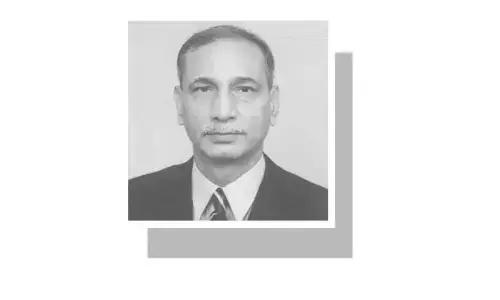
Ideally, countries should concentrate on sectors in which they possess a clear comparative advantage and import goods produced more efficiently elsewhere, says Ehsan Malik, former CEO of the Pakistan Business Council.
For Pakistan, he adds, comparative advantage is most apparent in sectors that effectively utilise its land, water and human resources, such as in value-added agriculture, mineral development, tourism and in globally demanded services like information technology (IT), medical tourism and professional services.
Between 2000 and 2022, Pakistan received about $50bn in official development assistance, but still ranks near the bottom of global human, social and economic indicators
Foreign assistance inflows to Pakistan almost doubled to $1.37 billion in the first two months of current fiscal year when compared to $714m last year, showing an increase of 93 per cent.
Inflows in August alone amounted to $680m, almost 152pc higher than last year’s $270m in the same month. In July this year, a total of $698m loans and grants flowed into the country compared to $444m in the same month last year, representing a 57pc increase.
National sovereignty has gradually been eroded through unchecked reliance on external aid, says Saeed Ahmed, author of ‘The Shady Economics of International Aid’ and a former senior IMF official.
At the macro level, he explains, Pakistan remains locked in IMF programmes. Budgets are passed by parliament but pre-approved by the IMF. Monetary policy is nominally independent but shaped by Fund advice.
Over the past 10 years, foreign direct investment into Pakistan has ranged between $2–3bn annually, with roughly 35pc directed to the power sector, underscoring the need for diversification
Between 2000 and 2022, Pakistan received about $50bn in official development assistance. Yet it still ranks near the bottom of global human, social and economic indicators.
Despite the proliferation of multibillion-dollar donor projects over decades, Mr Ahmad concludes: “It is difficult to find tangible positive outcomes. Growth has stalled, unemployment is rising, and poverty is deepening.”
The World Bank, the Asian Development Bank and others claim to be Pakistan’s “development partners” but, he says, they accept no responsibility for our worsening conditions.
Pakistan’s debt burden has reached alarming levels, with every citizen now owing Rs318,252, according to the latest estimates by the Economics Policy and Business Development Think Tank.
Figures show that per-person debt has ballooned from Rs90,047 in 2014 to Rs318,252 in 2024 — an average annual growth of 13pc.
The Pakistan Industrial and Traders Association Front (PIAF) has cautioned that overdependence on energy focused foreign investment is holding back broader economic growth, calling on policymakers to expand investment opportunities in mining, manufacturing, IT and other under-developed sectors.
PIAF Patron-in-Chief Mian Sohail Nisar said, “Foreign investors continue to channel funds primarily into energy, but Pakistan has far greater potential in mining, IT, and value-added manufacturing.”
Over the past 10 years, foreign direct investment into Pakistan has ranged between $2–3bn annually, with roughly 35pc directed to the power sector, underscoring the need for diversification.
Despite securing Rs1.23tr in new financing from commercial banks to reduce circular debts, the power sector will remain vulnerable to exchange rate fluctuations up to eight years due to dollar-indexed investments, particularly those linked to Chinese power plants, Power Minister Sardar Awais Leghari told a news conference recently.
Pakistan intends to ask the Chinese government to waive off interests on late payments owed to its power companies.
Fortunately, Pakistan will begin the upcoming Rabi season with record levels of carryover water storage of more than 13.217m acre feet (MAF) — 99.3pc of the peak capacity — in reservoirs, which may partially offset agriculture output losses caused by floods in the outgoing Kharif season.
Rabi season runs from Oct 1 to March 31, with wheat being the largest planted crop. Other Rabi crops include gram, lentil, tobacco, rapeseed, barley and mustard.
The Sindh government has launched a wheat grower’s support programme worth Rs55.9bn that aims to benefit more than 400,000 farmers and cover 2.26m acres of land of one to 25 acres.
Deputy Prime Minister Ishaq Dar is also spearheading the proposed launch of a new comprehensive strategy, the Pakistan Cotton Plan 2026, aimed at reviving the country’s declining cotton production. The plan is expected to be presented to the deputy prime minister shortly.
Implementation of the strategy is anticipated to significantly boost cotton yields, which could lead to a substantial reduction in the national import bill for cotton and edible oils.
Analysts also stress that small dams, rainwater reservoirs and ponds are low-cost, quick and doable projects for water storage and use in agriculture in Barani, or water-stressed areas, as well as river canal water-fed areas.
Officials, however, have cautioned that heavy sand deposits have been reported across farmlands due to the prolonged standing floodwaters in Punjab’s plains — unlike the usual fertile deposits that accompany floods. They said it was too early to predict the condition of agricultural lands until these areas are cleared of standing water.
Published in Dawn, The Business and Finance Weekly, October 6th, 2025