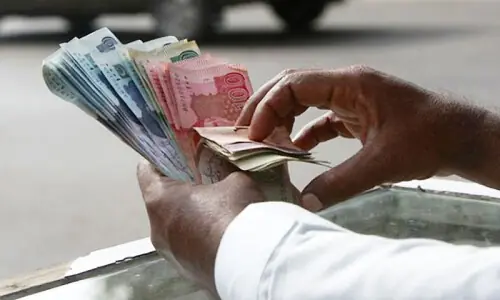
ISLAMABAD: Pakistan’s total public debt rose by 13 per cent to Rs80.6 trillion by the end of FY25, driven mainly by a fiscal deficit of Rs7.1tr and slower-than-expected GDP growth, according to the Ministry of Finance (MoF).
In its Annual Debt Review 2025, the MoF said the debt-to-GDP ratio increased to 70pc, up from 68pc a year earlier. This was attributed to a lower nominal GDP growth rate, resulting from reduced inflation, which limited economic expansion and pushed the ratio higher despite efforts at fiscal consolidation.
The MoF noted that while interest expenses rose by 9pc year-on-year, this increase was significantly lower than the 43pc recorded in the previous fiscal year. Total domestic debt stood at Rs54.5tr, and external debt at Rs26tr — both reflecting a 13pc annual increase.
The average time to maturity (ATM) for domestic debt improved from 2.8 years in FY24 to 3.8 years in FY25. External debt ATM remained above six years, consistent with the government’s Medium-Term Debt Strategy 2026–28. The external debt share in total public debt fell to 32pc from 34pc, reducing exposure to currency risk.
Fiscal deficit of Rs7.1tr and slower GDP growth drive up debt ratio to 70pc
The fiscal deficit was primarily financed through domestic borrowing — 91pc — mainly via net issuances of Pakistan Investment Bonds and Government Ijarah Sukuk (GIS). The remaining 9pc (around Rs600bn) came from external sources, mostly multilateral and commercial, with a net retirement in bilateral loans.
The MoF highlighted a deceleration in debt growth, noting that it had been reduced from 23pc in FY22 and 28pc in FY23 to 13pc in both FY24 and FY25. This was attributed to fiscal discipline and the generation of a significant primary surplus.
The report claimed credit for the government’s first-ever early repayments of over Rs1.5tr in FY25 and the launch of the inaugural Green Sukuk auction. These developments, alongside fiscal consolidation, helped narrow Eurobond yields to 6-9pc and contributed to a reported Rs850bn reduction in interest expenses.
Currency movements continued to impact debt valuation. In FY25, the rupee depreciated against the US dollar, while the dollar weakened against other major currencies, including the euro, SDR, and Chinese renminbi. Although the exchange rate had stabilised in FY24, these developments still added pressure on external debt servicing.
Domestic debt rose by 15pc YoY to Rs54.5tr, the lowest increase in the last three fiscal years. The share of short-term Treasury bills declined, reflecting the government’s strategy to retire short-term debt through buybacks.
At the same time, the share of floating-rate instruments, especially PIBs, increased, reflecting investor preference amid interest rate volatility. Sharia-compliant instruments like GIS grew to 12.6pc of total domestic securities in FY25.
External debt rose 6pc YoY to $91.8bn by June 2025, driven by inflows from the IMF, an ADB-guaranteed commercial loan of $1bn, and other multilateral lenders. Multilateral loans accounted for 57pc of total external debt, bilateral loans 26pc, and commercial sources — including Eurobond/Sukuk, commercial banks, and Naya Pakistan Certificates — made up 17pc. Bilateral deposits from friendly countries, mostly rolled over, accounted for 9.8pc of external debt.
Published in Dawn, October 2nd, 2025