Pakistan, China to speed up ML-1, SEZs implementation

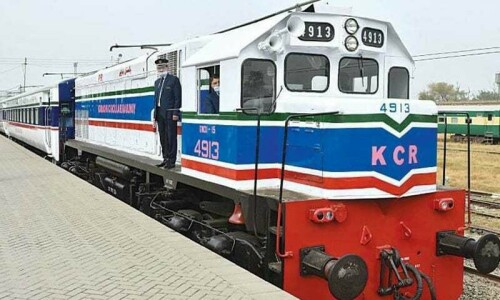
ISLAMABAD: Pakistan and China have agreed to fast-track work on the implementation of main line (ML-1) railway project and special economic zones (SEZs).
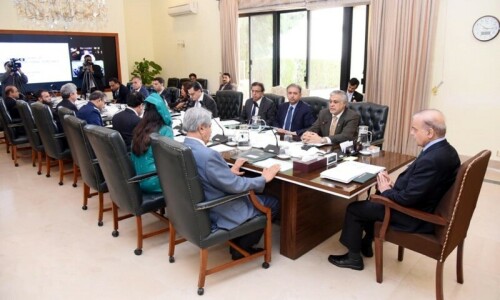
An agreement in this regard was reached between Minister for Planning and Development Ahsan Iqbal and National Development and Reform Commission (NDRC) Chairman Zheng Shanjie during a meeting held in Beijing on Tuesday, according to a press release.
The planning minister is on a four-day official visit to China to commemorate 10 years of China-Pakistan Economic Corridor (CPEC). During his visit, the minister co-chaired a special Joint Cooperation Committee (JCC) meeting with the NDRC vice chairman, besides holding several meetings with key Chinese officials.
During a one-on-one meeting with the NDRC chairman, the minister conveyed felicitations of Prime Minister Shehbaz Sharif to Mr Shanjie on assuming his new role and assured him of full support in smooth implementation of CPEC projects.
The NDRC chairman offered to share Chinese expertise and knowledge to enhance Pakistan’s export earnings and accelerate SEZs development.
Chinese official offers expertise to enhance Pakistan’s export earnings
Both sides decided to hold regular meetings of joint working groups (JWGs) to review ongoing cooperation under the CPEC framework and work closely for the next phase which is much wider in scope and focuses more on industrialisation, agriculture, science and technology and socio-economic development.
PM Shehbaz has already reiterated his full commitment to complete the CPEC projects and in this regard he visited China when he took charge as the prime minister.
Recalling the launch of CPEC a decade ago, the planning minister noted that the development of the corridor had been a remarkable journey. He remarked that since 2013, the relevant institutions from the two sides worked as one team and successfully implemented key energy and physical infrastructure projects, laying a strong foundation for the next phase of CPEC.
The NDRC chairman remarked that China and Pakistan were good friends and partners, adding that despite the vicissitudes of global politics, the two countries have always stood together and extended complete support to each other.
He also appreciated the key role played by Ahsan Iqbal in the development of CPEC. Out of 12 JCC meetings, nine have been co-chaired by Mr Iqbal.
Published in Dawn, July 12th, 2023