US slashes work permit validity period for foreign nationals, including refugees and asylum seekers


 1
1

The United States Citizenship and Immigration Services (USCIS) on Thursday announced changes that sharply reduced the maximum validity period for employment authorisation documents (EADs) for several categories of foreign nationals, citing security concerns and legislation signed earlier this year.
The move, the latest in a sweeping immigration crackdown by the administration of US President Donald Trump, took place just two days after it halted immigration applications for citizens from 19 nations.
Under the new rules, the maximum validity period for initial and renewal EADs has been shortened from five years to 18 months for categories including refugees, asylum seekers, those granted withholding of deportation or removal, and applicants with pending adjustment-of-status or relief applications.
Additional categories, including those paroled as refugees, granted temporary protected status (TPS) or under entrepreneur parole, will see the validity of their work permit reduced to one year or the end date of their authorised parole or TPS period, whichever is shorter.
These changes apply to applications pending or filed on or after Dec 5, 2025, or Jul 22, 2025, depending on the category.
“The reduced maximum validity periods will result in more frequent vetting of aliens who apply for authorisation to work in the US,” the agency said.
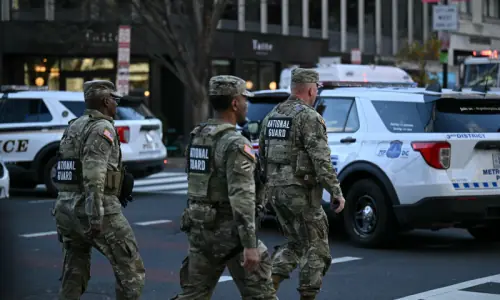
The agency added that after the attack on National Guard service members in Washington earlier this month, “it’s even more clear that USCIS must conduct frequent vetting of aliens”.
USCIS Director Joseph Edlow linked the change directly to safety concerns.
“Reducing the maximum validity period for employment authorisation will ensure that those seeking to work in the US do not threaten public safety or promote harmful anti-American ideologies,” he said.
US Homeland Security Secretary Kristi Noem said on Thursday the US plans to expand the number of countries covered by its travel ban to more than 30.
After a meeting with Trump on Monday, she said she recommended a full travel ban on “every damn country that’s been flooding our nation with killers, leeches, and entitlement junkies.”
All asylum cases on hold
Earlier this week, the Trump administration has imposed the most sweeping internal freeze on immigration benefits in decades, ordering USCIS to halt all asylum adjudications and suspend a wide range of applications from nationals of 19 “high-risk” countries, while reopening thousands of previously approved cases for fresh security screening.
The directive, issued to USCIS field offices, followed a series of violent incidents involving Afghan nationals admitted under earlier programmes. Those cases prompted the White House to conclude that vetting procedures between 2021 and 2024 were “dangerously insufficient”, triggering a system-wide overhaul of immigration screening.
The USCIS memorandum directed officers to place an immediate hold on all asylum applications, regardless of nationality. This included applicants from countries rarely associated with security concerns. Immigration attorneys said they were not aware of any previous instance in which asylum adjudications were frozen across the board.
The order also suspended all immigration benefit applications filed by nationals of the 19 restricted countries. These included green card petitions, replacement green cards, travel documents, parole extensions and applications to preserve continuous residence for naturalisation. Even routine services — such as replacing a lost green card — were paused.
USCIS officers were also instructed to reopen and re-examine all approved immigration benefits granted to nationals of the listed countries who entered the US on or after Jan 20, 2021. Mandatory interviews — with no possibility of a waiver — would be required in many cases, and cases may be referred to law enforcement if concerns arose during the review.
Additional input from AFP