54
54
ISLAMABAD: Pakistan should be included in the nuclear mainstream on same terms as were offered to other non-NPT states, said Strategic Vision Institute (SVI), a think tank that works on strategic issues.
The Islamabad-based think tank also rejected proposals made by Carnegie Endowment for International Peace and Stimson Centre, which had called on Pakistan to return to “strategic” deterrence instead of “full spectrum deterrence”, commit to a recessed deterrence posture and limit production of short-range delivery vehicles and tactical nuclear weapons; lift Pakistan’s veto on Fissile Material Cutoff Treaty and reduce or stop fissile material production; separate civilian and military nuclear facilities; and sign the Comprehensive Test Ban Treaty without waiting for India.
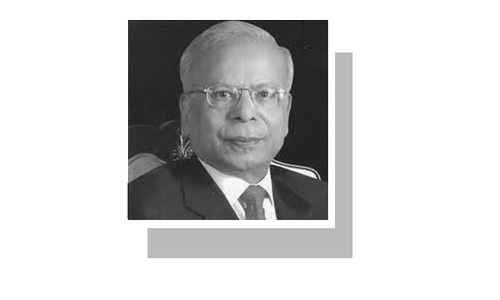
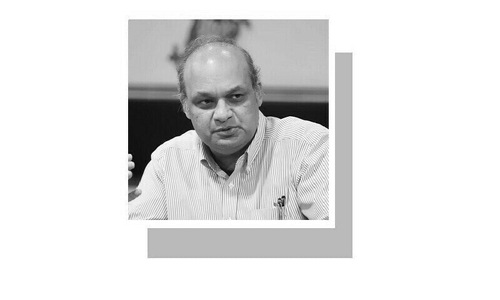
The SVI recommendations that cautioned against compromising on national security were framed by a group of nuclear experts comprising Dr Zafar Iqbal Cheema, President of SVI, and National Defence University professors Dr Zafar Khan and Dr Rizwana Abbasi.
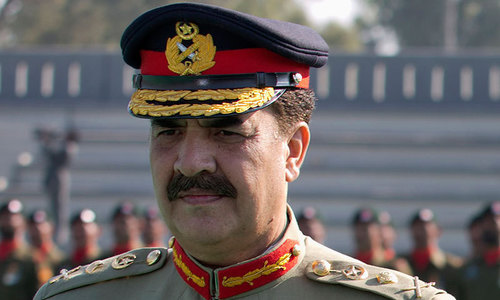
Debate surrounding the Western proposals for Pakistan’s nuclear mainstreaming has once again started ahead of Army Chief Gen Raheel Sharif’s visit to US from Nov 15-20.
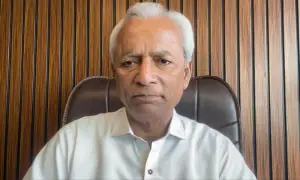
While launching the recommendations Dr Cheema said that proposals for “mainstream(ing) Pakistan into the international community are purposefully discriminatory because they aim at limiting Pakistan’s nuclear weapons capability, besides freezing the range of ballistic missiles”.
Dr Cheema criticised reports that emerge from time to time that Pakistan had the fastest growing nuclear programme and the country could be on the way to having the world’s third largest nuclear stockpile saying that authors of these reports mischievously use different criteria for Pakistan and India while making such assessments.
The American researchers, he said, had taken into account the potential (future) of Pakistani stockpiles while declaring it to be the fastest growing in the world, but in case of India they consider the actual production of warheads currently being produced instead of following uniform criteria in both cases.
Dr Cheema further said that regional security paradigm was being manipulated in a manner that was intended to maximise India’s conventional and strategic security as pivot to the US Asia-Pacific strategy, while minimising Pakistan’s security at the same time. He rejected the proposals floated by western think tanks for Pakistan’s nuclear mainstreaming and advised the government against falling for the inducements being offered.
Dr Cheema further said that it was absurd to ask Pakistan to revert from Full-Spectrum Deterrence to Strategic Deterrence and unilaterally sign the CTBT that the US itself had not ratified whereas India was not only left free to augment its nuclear weapons and ballistic missile capabilities but in fact was being offered advanced nuclear technologies and systems like BMD that would undermine strategic stability in the region.
Dr Zafar Khan and Dr Rizwana Abbasi, from National Defence University, spoke about the Full Spectrum Deterrence.
Conceptually, Pakistan’s treatment of full-spectrum deterrence was different from what others perceive, they said, adding that Pakistan’s National Command Authority (NCA) was clear on this that full spectrum deterrence, in its qualitative term, was to plug the gaps in deterrence and address all forms of aggressions.
Published in Dawn, November 10th, 2015