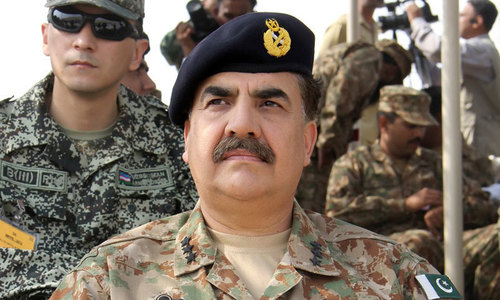
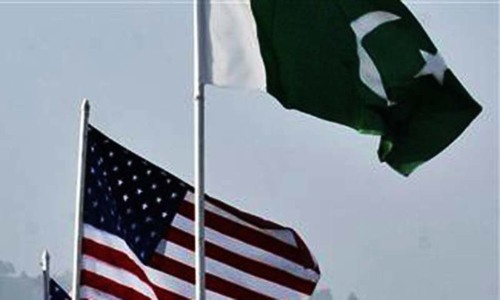
WASHINGTON: Pakistan’s nuclear programme is once again the focus of discussions in the US capital as Army Chief Raheel Sharif prepares to visit Washington next week.
Reports in the US media, and by think tanks, however, suggest that both sides have already taken clear positions on this issue.
The Americans want Pakistan to stop making tactical weapons, halt the development of long-range missiles and sign the nuclear test ban treaty.
Pakistanis link their nuclear programme to the security threat they face from India, want the Americans to sign a civil nuclear deal with Islamabad and help it join the Nuclear Suppliers Group (NSG).
But a senior US official told Dawn and some Pakistani media outlets in Washington that the United States was neither negotiating a civil nuclear deal with Pakistan nor seeking an international waiver.
Reports of “extensive nuclear talks” between Pakistan and the United States had also preceded Prime Minister Nawaz Sharif’s visit to the White House last month. And a joint statement issued after Mr Sharif’s meeting with President Barack Obama confirmed that they did discuss this issue.
The US official, who spoke to the Pakistani media, said that Washington had concerns about Pakistan’s nuclear programme and those concerns were not new.
But he made it clear that the United States was not discussing a civil nuclear deal with Pakistan, like the one it signed with India.
“The United States is not engaged in any dialogue on a civil nuclear agreement with Pakistan. Nor are we seeking an exception for Pakistan within the NSG to facilitate civil nuclear exports,” he said.
The United States did get such a waiver for India, enabling it to join the NSG.
Asked to elaborate US concerns about Pakistan’s nuclear programme, the US official said the United States urged all nuclear capable states, including Pakistan, to exercise restraint regarding nuclear weapons and their missile capabilities.
“We have ongoing dialogues where we encourage efforts to strengthen safety and security measures on Pakistan’s nuclear weapons programme. And these dialogues are very important,” he said.
Published in Dawn, November 9th, 2015
On a mobile phone? Get the Dawn Mobile App: Apple Store | Google Play