Conscientious objections to war rise sharply in US
• Growing number of service members seeking information on how to apply for discharge
• March alone saw over 80 new cases, nearly double annual norm
• School bombing in Iran cited as key turning point by many callers
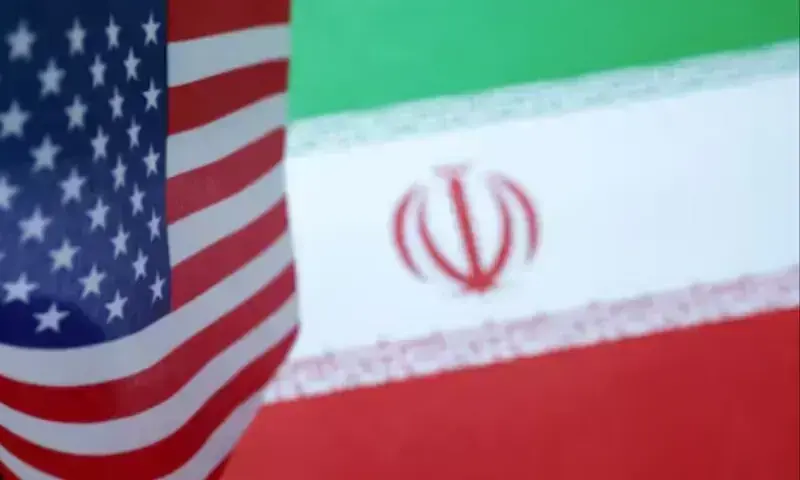
WASHINGTON: The US-Israeli war against Iran has caused an unprecedented surge in US service members seeking information about conscientious objection, according to the Centre on Conscience and War, a nonprofit that advises troops on their rights.
The group says calls to its 24-hour GI Rights Hotline have increased by 1,000 per cent in recent weeks, with many active-duty personnel asking how to apply for discharge as conscientious objectors — a rarely used and often complex process.
In interviews with various US media outlets, including National Public Radio, the centre’s executive director, Iraq War veteran Mike Prysner, said the spike reflects a deep moral reckoning among troops in the wake of the conflict with Iran.
“In a typical year, we see about 50 conscientious objector applications from active-duty military personnel,” Prysner said. “Since this war started, we’ve fielded hundreds of calls from active-duty military who do not want to participate and are strongly opposed to the war.”
Bill Galvin, the centre’s counselling director, said March alone brought more than 80 new clients — nearly double the organisation’s usual annual caseload. On its busiest single day, 12 new clients contacted the centre, with one caller saying four other members of their platoon were also considering applying.
Military personnel cite a range of reasons for wanting to leave, but the war in Iran has been a “powerful motivator”, Galvin said. One incident frequently mentioned by callers, according to Prysner, was the US bombing of the Minab Shajareh Tayyebeh girls’ elementary school. A preliminary Pentagon assessment later found the US was at fault for the strike.
Prysner said the school bombing was described by many callers as a breaking point. “That was the moment where they realised, ‘I’m not going to take part in the killing of children in another country,’” he said.
Until the Vietnam War era, conscientious objector status in the United States was largely restricted to those with religious objections. However, the US Supreme Court’s 1970 ruling in Welsh vs United States broadened the definition to include deeply held moral or ethical beliefs against participation in war.
Under current Pentagon policy, a service member who formally applies for conscientious objector status should be reassigned to non-combat duties while the application is reviewed. Prysner said commands are obligated to accommodate such requests during the investigation process, and that some applicants scheduled for deployment were allowed to remain in the United States after filing.
He estimated a roughly 99pc success rate for applicants assisted by the centre, saying the primary criterion in such cases is “sincerity”.
“The investigation is about whether the belief is genuine and deeply held,” Prysner said. “Our clients are sincere people who believe they cannot take part in killing.”
A generational shift
Prysner argued that the current surge surpasses the number of applications seen during some of the deadliest years of the Iraq and Afghanistan wars, as well as during the Abu Ghraib prison abuse scandal.
He attributes the increase partly to a younger generation of service members who grew up during the US “war on terror.”
“They grew up with the lessons of those wars — wars that were disastrous and, in the case of Iraq, based on false premises,” he said. “Many believe the US left those countries in worse shape.”
Some callers have also cited Israel’s military campaign in Gaza following the Oct 7, 2023, Hamas raid in southern Israel as influencing their thinking. According to Prysner, the direct US involvement in the Iran conflict has blurred what some troops previously saw as a distinction between American and Israeli military conduct.
Domestic developments have also played a role. Prysner said some service members were troubled by the deployment of National Guard troops to quell protests against immigration enforcement operations.
Despite the dramatic increase, those seeking conscientious objector status remain a small fraction of the more than one million active-duty US military personnel.
Prysner believes many troops experiencing moral doubts are unaware that conscientious objection is an option.
Published in Dawn, April 11th, 2026