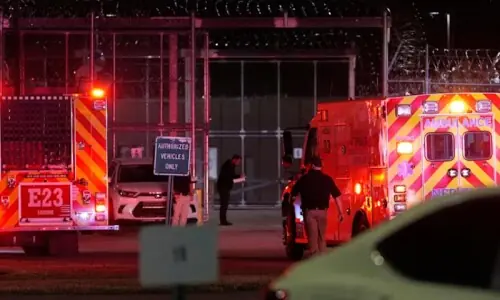
FOR the past several days, Azad Kashmir has witnessed deadly protests, as life in the region remains paralysed. At the forefront of the protests has been the Jammu Kashmir Joint Awami Action Committee, which has been pressing for the acceptance of its 38-point charter of demands.
The demands range from calls for subsidies to changes in the structure of the AJK legislature. Matters got out of hand on Monday when supporters of the JKJAAC and participants of a Muslim Conference ‘peace rally’ clashed during a strike call. There were more clashes on Wednesday, resulting in at least 10 deaths to date, while the region has also been experiencing a communications blackout.
Prime Minister Shehbaz Sharif had dispatched a high-level negotiating team on Thursday, including several federal ministers, to try and find a solution to the deadlock. Officials say that “90pc” of the protesters’ demands have been accepted, but two issues remain unresolved — calls for an end to ‘elite privileges’ of AJK’s ministers and officials, and the abolition of reserved seats in the region’s parliament for refugees who had arrived from held Kashmir.
This is the third major round of protests in the region in two years, with many of the outstanding issues unresolved. Where the issue of elite privileges is concerned, the fact is that when officials secure handsome perks for themselves and there is no visible improvement in governance, it is bound to fuel discontent.
As for subsidies, while the common man should not be overburdened, the state’s financial situation must be kept in mind when demanding financial relief, while tax rates should also be fair and rational. Regarding the abolition of refugee seats, this is a legislative matter, and it should be thoroughly debated in the AJK parliament, which can arrive at a democratic solution acceptable to all.
The fact is that both the state and the protesters need to step back from the brink, and find constructive ways to address contentious issues. Protest is a fundamental right and heavy-handed state actions cannot be condoned. All sides must also keep in mind that this is a very sensitive area, and no actions should be taken that can lead to instability in AJK. Life must be brought back to normal, and long-term solutions need to be debated and found so that the region does not erupt in protest again.
Published in Dawn, October 4th, 2025