WITH resurgent militant activity in KP’s tribal districts, and public fears about further violence due to terrorism and counterterrorism operations, the state faces unenviable choices.
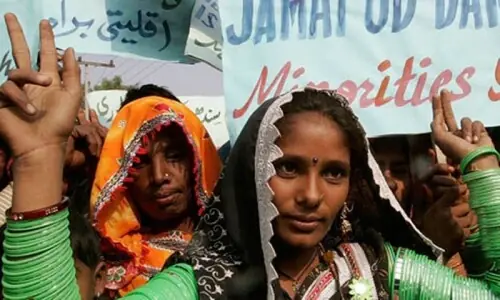
Over the past few days, the KP government has hosted three major jirgas in different parts of the former tribal belt to gauge public opinion about how to deal with resurgent terrorist activity. The local tribes have demanded talks with the Afghan Taliban, as well as negotiations with banned groups, while some reports suggest a consensus in the merged areas against further military operations — perhaps it is in response to these concerns that the state minister for interior has said there will be no operation. Local jirgas elsewhere have endorsed similar demands. Meanwhile, the KP administration has planned to host a grand jirga to chart a way forward.
For over 20 years, KP, including the former Fata region, has faced almost constant violence on account of both terrorism and CT operations. People have lost loved ones and faced displacement. Fatigue and desperation after two decades of conflict have led the tribal people to demand talks with the militants and an end to kinetic action.
Yet while the views of the local people should be heard, it must also be remembered that terrorist groups have mostly broken the pacts signed with the state. There is no guarantee they will honour their agreements this time; peace deals may offer temporary relief but eventually collapse. Moreover, the state — specifically the military — refers to the banned TTP as ‘India-backed Fitna al Khawarij’; will this description remain if talks go ahead?
Secondly, will the militants agree to renounce violence in case of successful negotiations? Unless they do, any resultant peace deal will only weaken the state. Furthermore, the state has sent several delegations to talk to the Afghan Taliban, in order to urge them to rein in Afghanistan-based militants. No tangible long-term effects of these talks have been visible in the form of reduced violence.
Perhaps we find ourselves at this juncture because ever since the ‘war on terror’ was launched in this region, the state’s CT policy has failed to create lasting peace. This is despite the fact that we have lost thousands of civilians, military men and police personnel in the war against militancy. Despite successive military operations, as well as CT policies such as NAP and NAP 2.0, and multiple attempts to stamp out violent extremism, we find ourselves back to square one.
A thorough review of the state’s CT policies is required by the civilian leadership, the intelligence community, the establishment and area experts. This cycle of rising militancy, kinetic action, displacement, temporary calm and resurgent militancy must be broken, and a permanent solution to Pakistan’s militancy problem found.
Published in Dawn, August 8th, 2025