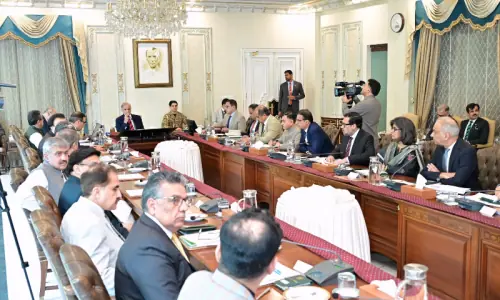
PESHAWAR: The issue of so-called “Good Taliban” and direct talks with the interim Afghan government continued to reverberate in back-to-back tribal jirgas convened by the provincial government, as the third such moot held on Wednesday stressed that military offensives could not restore peace to the region.
Wednesday’s sitting, the third in this series since August 2, featured representatives from North Waziristan, Upper and Lower South Waziristan, as well as the tribal subdivisions of Wazir, Bettani, Darazinda, and Jandola.
They demanded talks with both, banned outfits in Pakistan and the Afghan interim government, to secure peace in the region.
The sessions are being held in the wake of the July 24 multiparty conference, which had recommended that jirgas, comprising elders, parliamentarians and stakeholders from every district, be convened before holding a grand jirga some 15 days later to devise a strategy for the implementation of decisions. For the grand jirga, members would be nominated by the first jirga.
Tribal representatives from Waziristan, other areas say military offensive can’t ensure regional peace
The first regional jirga with tribal elders, religious scholars and representatives from Peshawar, Orakzai, Darra Adam Khel and subdivision Hassan Khel had recommended that the federal government arrange a delegation, comprising representatives of the provincial government and tribal elders, to hold a dialogue with Afghanistan and provide necessary support and resources to facilitate this process.
The second jirga, which was organised on Aug 4 with representatives from Bajaur and Mohmand tribal districts, opposed military operations or forced displacement, while seeking a broad-based and empowered jirga, with members from federal and provincial governments, tribal elders and all key stakeholders, to engage in a meaningful dialogue with the Afghan people and interim government to root out terrorism in the region.
On Wednesday, too, the jirga stressed talks, not military offensives, could bring peace in the region, seeking talks with both the banned outfits in Pakistan and the interim Afghan government.
“Negotiations are the only way out and this is evident from the recent past when Americans and their allies, after fighting against Afghan Taliban for over 20 years, held talks,” sources privy to the meeting told Dawn.
“The state has been at war against militants for almost 22 years with several military operations already carried out against militants, but the situation has yet to improve,” sources quoted participants of the meeting as saying.
They, however, were surprised with the provincial government’s approach towards the issue, objecting that the meeting held for devising future course of action for peace in the region did not give any security briefing to the participants. Some participants also objected to what they called the policy of ‘Good and Bad Taliban’.
“We do not accept this policy. We do not want any of them and the state has to chain the Good Taliban,” the sources quoted the participants as saying.
Another participant in the meeting quoted the KP chief minister as saying the provincial government wanted public support to forward the case to the ‘power-that-be’ and termed people his strength.
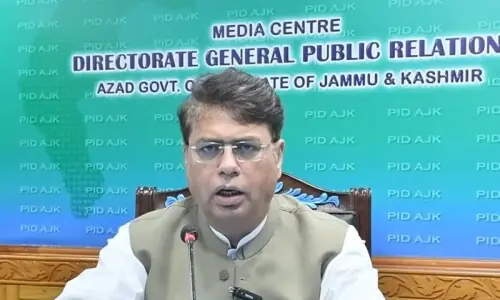
When contacted, KP government’s spokesperson Barrister Muhammad Ali Saif said this [engaging Afghan interim government for peace in the region] was the provincial government’s stance and then people of the province, too, demanded engagement with the interim Afghan government.
“The federal government is not serious in peace in this region which is why it has yet to reply to the TORs prepared by the provincial government in February, for negotiations with the interim Afghan government,” Mr Saif told Dawn.
He was of the opinion that the process of “negotiations with Afghanistan’s interim government would have begun earlier, had this [militancy] been happening anywhere else in the country”.
Published in Dawn, August 7th, 2025