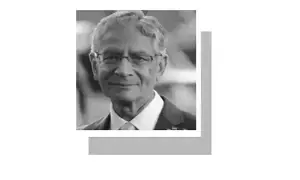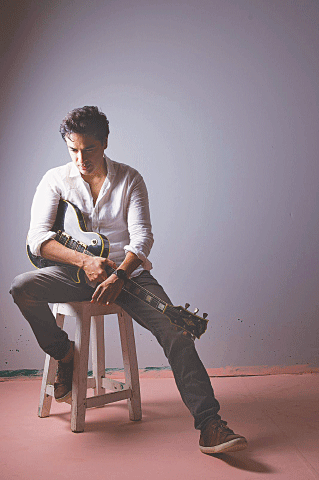
Musician. Activist. Fledgling actor. Shehzad Roy wears many hats. He wears them well, both figuratively and literally. With his persistent youthful good looks, he looks great in whatever role that he chooses to play. His passion for what he does and conviction ensures that he often manages to achieve whatever he sets out to do.
Shehzad’s journey is a long, colourful one, his path winding from being the poster-boy for catchy, boppy love songs back in the ’90s, to finding his calling as an activist, working diligently towards social reforms. Many may still recall him as the ‘chocolate hero’ of sorts, strumming his guitar casually as he loitered into Pakistan’s burgeoning music scene, back before the avalanche of private channels had spurred the industry forward. Some of his songs became so popular that the lyrics have since gotten incorporated into our lexicons — there may have been times when you mumbled ‘Laga reh, laga reh tu laga reh [Keep at it, keep at it, you just keep at it]’ while watching the daily news!
It is difficult, though, to distinguish Shehzad’s music from his work as an activist — they are but two sides of the same coin, bound together indelibly, merging very often in the form of a socio-political song that incisively points out troubling societal norms. When I meet Shehzad, he lets me hear one such song — a single that hasn’t released yet, in which he has sung with students from a government school that his organisation Zindagi Trust has adopted. It’s a catchy commentary — part music, part rant — making fun of the national obsession to make our children eschew Urdu and speak only English, of the race to admit a child into an elite school and of rampant tuition culture. The song is funny, but thinly veiled behind the jokes are deep-rooted social messages designed to instantly hit a chord with parents today. Quintessential Shehzad Roy.
From what I can tell, his life constantly ricochets between implementing reforms and unwinding in his spacious studio, set up in the basement of his home. In fact, on the day that I meet him, I am asked to come about half-an-hour after our previously scheduled time because he had gotten delayed at an event that he told me marked the conclusion of a four-year study by the Aga Khan University where the B.Ed. Masters programme by his not-for-profit organisation, Durbeen, for training teachers across Pakistan had emerged stronger than a typical Karachi-based government teacher education college.
Durbeen’s programme has been set up in partnership with Oxford University — an achievement that Shehzad says has been largely made possible with the help of Malala Yousufzai and her father. Following our interview, he shows me his studio — a space right out of a rockstar’s dream, well-equipped with shiny, state-of-the-art musical instruments, the walls buffered for soundproofing.
The beauty of Shehzad Roy’s inspirations is that he follows them through. Soon to be seen as Allan in the cinematic adaptation of Alif Noon, he considers himself lucky to have been able to look beyond his personal and professional interests in an attempt to work towards other, “bigger purposes”
“I don’t think that I would have been able to get reforms implemented as easily had it not been for music,” Shehzad tells Icon. “I am able to go to anyone, from the prime minister to others [in the government hierarchy] and they already know me because of my music. Music is my passion, but today I get as much a kick from working on reforms as I do from releasing a song. I am just as excited when the Supreme Court approves creating awareness regarding ‘safe and unsafe touch’ across Pakistan as I am about the song that I am releasing with some of the students from our schools. When you make an impact, it’s a great feeling.”
Part of his process, sometimes, is a song that sheds light on a particular issue and is, in fact, a ‘call to action.’ “Sometimes I face an issue and it inspires me to write a song. ‘Buzurgoon ko mein yeh bola, naek woh hai jiss ko mauqa nahin mila [I told my elders, only he who did not get the chance is virtuous]’,” he says out a famous line from his song ‘Laga Reh.’ “Change comes from a movement and music is part of it.”
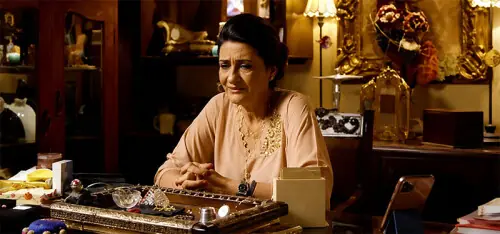
Perhaps, Shehzad will also make his acting a part of it. While our conversation ping-pongs often between his musical identity and activism, the raison d’etre behind our interview is that Shehzad is about to make his cinematic acting debut with the movie, Alif Noon. Directed and written by Faisal Qureshi, the movie takes inspiration from the TV cult classic of the same name from the ’60s — Shehzad will be seen as Allan, while Faisal will play Nanha. The movie’s cast also includes Sajal Aly and Mehwish Hayat as leads, along with Ayesha Omar, Ali Rehman Khan, Mikaal Zulfiqar, Ali Aftab, Hina Dilpazeer, Marhoom Ahmed Bilal, Ahsan Rahim, TikToker Taha Usman and Turkish artist Seda Noor.
What prompted him to dabble in cinema? “I am a big fan of the original series and Faisal would often talk to me about how a movie based around the same concept would be great. I was just able to relate to all that he was saying. At that time, I was waiting for a movie script that was being written by Anwar Maqsood. That script is now complete and it is with me. In the meantime, we started off with Alif Noon.
“The storylines in the original series largely followed the theme of a social satire and this movie will allow us two hours to give certain social messages. It is a commercial movie, of course, with music and comedy, but there are underlying messages in the script without it being preachy.”
Was it difficult finding his bearings as an actor? “Not really, even in music videos, we act.” He gives an example: “In the video of ‘Apnay Ulloo’, there is plenty of acting!”
But a movie is much longer, involving many more dialogues and emotions. “Yes,” he concedes, “but I just acted naturally. It helped that the character of Allan was a lot like me, in the way I think and what inspires me.”
The movie has been in the works for quite some time, I observe. “We wrapped up the shoot about a year-and-a-half ago but yes, the pre-production has taken a lot of time. I have seen the movie. I’ll let people decide whether they like it or not.”
This steers my train of thought back to Shehzad’s musical career. Did he ever — during his early years when he was fully occupied with singing to present day, when his time is divided between music and activism — take offence to criticisms of his singing and songs? Shehzad smiles. “For one, I don’t get angry. I don’t think any musician who has worked with me has ever seen me shouting. I just like to channel my anger, my energy into doing something constructive. I see no point in arguing with an individual just to prove that I am right about something. If I have to fight, I will fight for a cause.
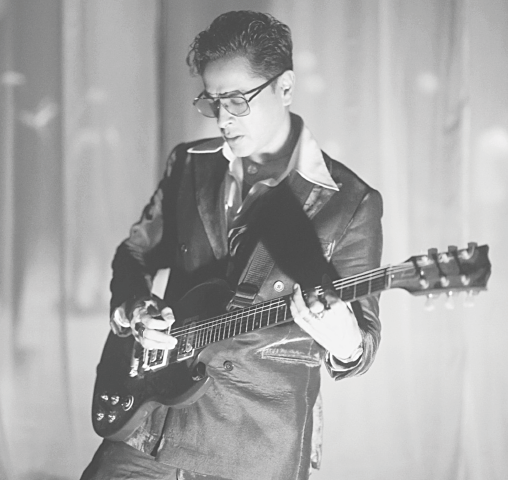
“So, I have never gotten angry if someone has said that they haven’t liked a song of mine. I am actually a guitarist and it just by accident that I became a singer. My guitarist, Imran Akhoond, is one of the finest musicians in the country and he says that sometimes I play a riff that even he can’t replicate.” He quips, “My sister used to say: ‘Be the singer, not the guitarist, because everyone remembers the singer while the guitarist stands at the back’.”
That is true. He agrees, “Yes, if I had stuck to being just the guitarist, perhaps I wouldn’t have been able to achieve as much.”
Does he miss the female fan following that he must have had back in the day? Does he still have it today? He grins. “You know, a lot of people tell me that I had a lot of female fans and my reaction is: where are they? I would like to see them!”
I find this a bit unbelievable — you were the country’s all-time favourite crush! “I would like to meet the people who considered me their crush. The thing is, I would perform on stage and then leave from the back. I never really socialised at parties. So maybe I never registered that I had this following.” He adds, “Yes, I did get a lot of fan-mail, but I never really lived the lavish life of a rockstar — not then, not now.”
I can’t resist mentioning to him that social media often has a field day labelling Shehzad as a ‘vampire’ because his looks haven’t changed much over the years. He laughs. “Yes, I have no role to play in these jokes and memes, but I do find them very funny. Sometimes I quip that I have taken a ‘stay’ on age from the Supreme Court.” He pauses. “The only time when it irritates me is when I am trying to put forward a serious message on social media and the very first comment is on my age.”
Does he miss constantly getting media attention — although he is still very much in the public eye with his social work often in the news. “I have never craved it, unless there is a purpose to it. When Alif Noon’s release is near, I will promote it to the best of my efforts. But generally, I work at my own pace. I released my album Saali back in 2005 and then, Laga Reh came out in 2008. After that, I didn’t release any album and instead, in 2010, I worked on the YouTube show Wasu aur Mein, and in 2012, in the series, Chal Parha.”
So, you prefer not to be in the rat race, I ask. “Now, you are calling it a rat race yourself,” he tells me. “So even if I win the race, I’ll still be a rat. I don’t want to be one!
“I just don’t take myself too seriously. When you take an aerial view of the world, you realise that our personal goals are too limited. Perhaps if I hadn’t found a larger cause, I would also be constantly churning out music, working in ads. I am lucky that I have been able to look beyond my own personal and professional interests and work towards other, bigger purposes.
“Even when I was young, I would get irritated by economic discrepancies and class differences. I was very good friends with Abdul Sattar Edhi sahib — he even did a video with me. I really felt the need to help people and I knew that I would have to take a scientific approach in order to achieve results. When Zindagi Trust was founded, we decided that while I couldn’t go into people’s homes and reform their way of thinking, the school was a place where we could train young minds.”
He continues, “We could have set up separate buildings, but it made more sense to adopt government schools that were already there and make changes. It wasn’t easy. We adopted the SMB Fatima Jinnah School and the principal told us that one of the main issues was that there were too many dogs on the school grounds. Back then, school grounds would be rented out for weddings and the leftover food would eventually attract strays. We took help from Mustafa Kamal, who was the mayor of Karachi at the time, in abolishing the norm of holding weddings on school grounds and in eliminating the land mafia’s control over these spaces, not just in Karachi but also through most of Sindh. We got a lot of threats but we persisted. It inspired me to write the lyrics of ‘Laga Reh’.”
Today, the same school’s dilapidated walls have been replaced by a solid infrastructure, the lawn is well-manicured, and the wide, clean spaces let in sunshine and wind. “The social re-engineering process gives me so much happiness,” he says. “If I was doing all this just to make people happy, it would have been charity and perhaps I would have eventually gotten bored. But I do what I do because it gives me a kick. I love my country, I love what I do.”
He proceeds to recall one aspect of Pakistan that he finds loveable, dating back to 2006, when he raised funds for Zindagi Trust by organising a Bryan Adams concert in Karachi. “I knew Bryan through some mutual friends…” I interrupt Shehzad here to congratulate him on having some remarkable friends! He then continues, “It was very kind of him to come. The concert took place very close to Eidul Azha, and while I was taking Bryan and his band back from the airport, they saw a goat’s head protruding from a car window. They thought that it was a dog and I had to correct them, telling them that it was a goat that someone must have bought for Eid.”
He laughs. “Look at how interesting Pakistan is! What I see around me sometimes inspires me to work on reforms or to make music, or to work in a film!”
The beauty of Shehzad’s inspirations is that he follows them through, following a pattern that he calls ‘scientific’. “It’s how we have been able to sustain so many of the reforms that we have worked on,” he says.
In a recent video uploaded on the Zindagi Trust Instagram page, some of the students from one of the schools adopted by his trust played Beethoven beautifully on the violin. In another, a little girl proudly walks about her school, recounting what she does throughout the day.
And all I can say to Shehzad Roy is, in his own words, “Laga reh.”
Published in Dawn, ICON, July 27th, 2025