In the last couple of years, one has observed that the work of literary translations in Pakistan is increasing and expanding, after having witnessed a slowing down for some years. There have been scores of good quality translations recently made available to our readership in fiction, poetry and other forms of non-fiction.
In the early years, it was major public universities like the Punjab and Karachi universities that led the effort when it came to the translation of academic works or literary classics. They were joined by public institutions established to promote art and literature, such as the Pakistan Academy of Letters and the Majlis-i-Taraqqi-i-Adab. Independently, there were a number of publishing houses across Pakistan, mostly but not limited to Karachi and Lahore, that published high quality translations of classical and contemporary global literature into Urdu.
Sindhi has its own powerful tradition of translations from world languages, which included both literary and political works. Hyderabad has remained a centre for doing and publishing translations in Sindhi. Other languages that we speak also attracted women and men of literary stature to translate works from their mother tongues into Urdu and English. For instance, from Taufiq Rafat’s and Alamgir Hashmi’s translations of Punjabi classical poetry into English to Imtiaz Ahmad Sahibzada translation of Ghani Khan from Pushto into English and Fazal Baloch’s recent translation of Mubarak Qazi from Balochi into English, all have made us richer.
What we see now is individuals personally invested in literature coming forward, picking up the works of their choice and making translations available to a wider audience. Here, I will limit myself to three books of translations of poetry published in recent months and which offer a rich variety of verse from Persian and Urdu.
The first is Nayyer Khan’s Selected Poems of Majeed Amjad, Mustafa Zaidi and Noon Meem Rashid, Urdu poetry most creatively and brilliantly adapted into English. The imagery he has used to translate the thoughts of our modern masters could have only been possible because of Khan’s penchant for both poetry and visual art. I quote a few lines from Majeed Amjad’s poem ‘Autograph’ translated by Khan. “… That bowler was encircled by multiple faces bright as moon/ A pen crafted with pearls ran on the page of a memory book with great self-importance/ Amidst delightful giggles, another wicket fell…”
Khan’s translations are mostly from the three poets mentioned in the title. However, he has insightfully also picked up representative poetry from more than 20 other poets, including a Punjabi poem by Mazhar Tirmizi and a kaafi by Khawaja Fareed. As an example, Khan’s command over his content can be seen in his translations of Mustafa Zaidi’s couplets.
Zaidi says: ‘Rait par phaink gayi aql ki gustakh-labi/ Phir kabhi kashf-o-karamaat ka darya na khula.’ Khan translates: ‘The audacious tongue of reason had me cast ashore on sand/ Never again did the river of miracles and wonders unfold once.’ Khan’s work is privately published this year, which must now be picked up by a major publishing house for wider outreach.
The other absorbing work of translation that came out this year is Dr Tanveer Ahmed’s rendition of Farogh Farrukhzad’s selection of Persian poetry into Urdu, titled Isyaan [Sin], published by Book Home, Lahore. Farrukhzad has been translated into Urdu before by a few people, including poet Fahmida Riaz’s translations of her selected poems that came out in the 1990s. Major poets or fiction writers are often translated by many people, which adds layers of meanings for the reader, if translations are of similar quality to each other.
Ahmed has been successful in translating the complexity of emotion and metaphor in the poetry of Farrukhzad for two reasons. The first being his spending time in pre-1979 Iran and bearing witness to its life and culture, and the limitations and the possibilities of living under a regime which was supposedly liberal but totalitarian in nature. The second is his awareness of the modern Persian literary landscape. It comes out in a brief but informative note that he has written as the prologue to the book.
Ahmed translates Farrukhzad with facility: “Sard seena zameen par qabron ke daagh hain/ Har salaam rukhsati ka tareek saaya hai/ Haath khali hain aur duur aasmaan par/ Beemar, tap-zada, zard khursheed hai.” Let me attempt a crude English translation here: There are stains of graves on the cold-hearted earth/ Every greeting is a dark shadow of farewell/ I stand empty-handed and upon the sky — above and far/ There is a sick, feverish, yellow sun.
Malik Muhammad Danish’s translation of modern Persian verse in English, titled Honeyed Poison, is the third collection I would like to mention. In 2024, it was published by JustFiction, an imprint of Dodo Books based out of different cities in Europe. He has chosen 60 poems by 20 poets who mostly wrote in the 20th century, with a few of them alive who still continue to write. Ranging from Nima Yusij to Sohrab Sepahri to Nusrat Rehmani to Qeysar Aminpour, the range seems to be representative of modern Persian poetic thought and the differently evolved idiom from the classical times.
I quote a stanza from the poem ‘Ineffectual Magic’ by Fereydun Moshiri: “O eagle of love!/ From distant, befogged mountaintops/ Fly to the sorrowful deserts of my life/ And carry me places where wine fails to take me…”
For some among us, it has become fashionable to say that nothing significant is happening on the Pakistani literary scene. Even our literary translators prove them wrong, leave alone those who continue to create original poetry and fiction in all the languages that we speak.
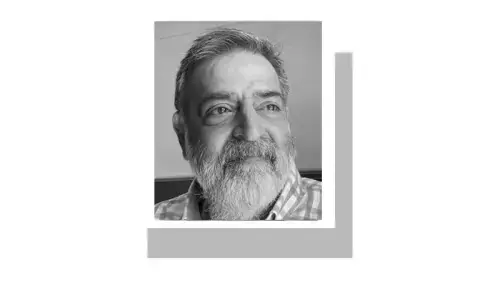
The columnist is a poet and essayist.
His latest collections of verse are Hairaa’n Sar-i-Bazaar and No Fortunes to Tell.
Published in Dawn, Books & Authors, July 13th, 2025