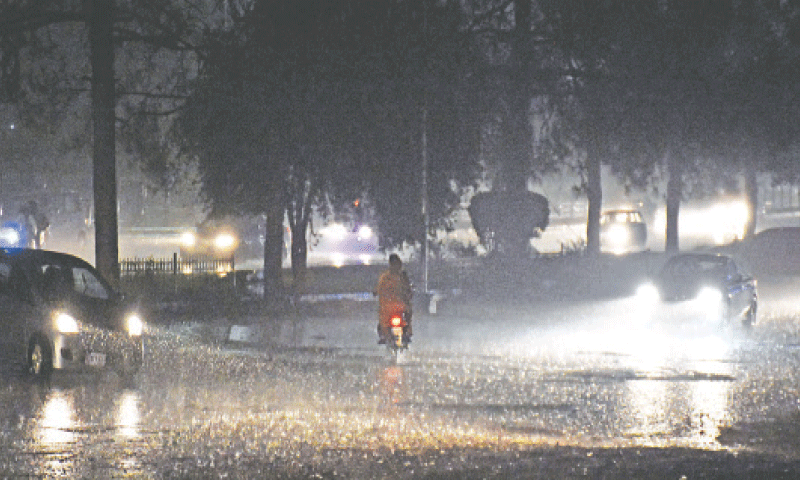
MUZAFFARABAD: The State Disaster Management Authority (SDMA) of Azad Jammu and Kashmir (AJK) on Thursday issued an advisory to administrative and infrastructure departments in view of a fresh weather alert predicting heavy to very heavy monsoon rains from July 11 to 17.
In a letter addressed to the commissioners of Muzaffarabad, Poonch and Mirpur divisions as well as the chief engineers of Communication and Works (C&W) in both north and south zones, the SDMA warned of possible flash floods, landslides, urban flooding and structural damage caused by strong winds, thunderstorms, hailstorms and lightning.
According to the SDMA, between June 1 and July 10, as many as 40 houses, six shops, one watermill, three vehicles and approximately 1.5 kilometres of roads were partially or completely damaged by flash floods in different parts of AJK. However, physical losses remained limited - with one death and five injuries - as many residents had vacated vulnerable houses in anticipation of rising water levels.
Citing the Pakistan Meteorological Department (PMD), the SDMA said intermittent rain-wind/thunderstorms with scattered heavy falls were expected across AJK during the forecast period, which may trigger rapid runoff, particularly in local nullahs and streams.
To mitigate the anticipated impact, the authority directed all District Disaster Management Authorities (DDMAs), Rescue 1122, and other line departments to undertake proactive measures within their mandates and in accordance with ground realities.
The SDMA also highlighted the need to forewarn tourists and travellers about vulnerable areas, potential landslides, hailstorms and significant drops in temperature and to provide guidance and assistance in case of emergencies through the local administration, police and rescue services.
Departments were instructed to ensure the availability and deployment of emergency services and equipment such as Rescue 1122, fire brigades, ambulances, and civil defence in high-risk areas. Emergency stocks were to be replenished and prepositioned at strategic locations.
The National Highway Authority (NHA) and other relevant departments were asked to conduct regular inspections of critical infrastructure, particularly bridges and roads, to identify and address any vulnerabilities.
Traffic police were tasked with coordinating with law enforcement agencies to manage traffic flow from affected to safer areas in order to avoid congestion and facilitate emergency operations.
The general public was advised to take shelter in sturdy buildings during storms and avoid exposure to objects that could fall or attract lightning. Farmers were urged to protect their crops through timely harvesting, safe storage, or other precautionary steps to minimise losses from adverse weather, including the risk of hail and significant temperature drops.
The SDMA stressed the need for enhanced coordination among all relevant departments and agencies to facilitate timely information-sharing and response. It also called for the establishment of effective communication channels with local communities to deliver real-time updates, instructions, and emergency contact details.
The authority urged all concerned departments to provide twice-daily updates to it during the forecast period for onward submission to the Prime Minister and the National Disaster Management Authority (NDMA).
Published in Dawn, July 11th, 2025