INDIA’S BJP-led government had apparently thought that it could exploit the Pahalgam tragedy to internationally isolate Pakistan, blaming this country for the atrocity without a whit of evidence.
Yet few in the global arena, including India’s traditional foreign partners, particularly the US, are buying New Delhi’s narrative, with most states urging both sides to de-escalate and prevent a fresh conflagration in South Asia. For example, American Vice President J.D. Vance, who was in India when the attack took place, has urged New Delhi to avoid taking actions that could “lead to a broader regional conflict”. He also asked Pakistan to “cooperate”.
The EU’s foreign policy chief Kaja Kallas has similarly observed that “escalation helps no one”. The fact is that while many in the Indian government and its hyper-nationalist media outlets are baying for Pakistani blood, the international community, already preoccupied with the Ukraine war and the slaughter in Gaza, has little appetite for hostilities in the subcontinent.
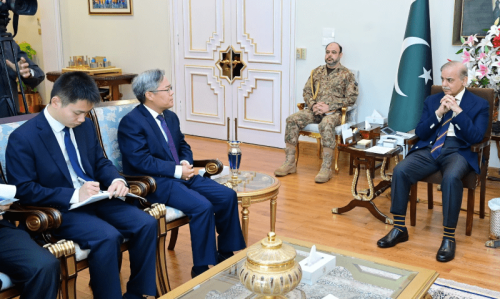
The government has done the right thing by continuously staying in touch with foreign friends and partners to explain Pakistan’s point of view and calling for restraint. The prime minister on Friday met the envoys of key Gulf allies, while the foreign minister has also been in contact with global players. The military’s top brass, meanwhile, has signalled its readiness to respond to Indian shenanigans.
Sadly, New Delhi remains committed to its dubious goal of isolating Pakistan in the shadow of the Pahalgam episode. Along with the paring back of bilateral ties, Indian officials have called upon multilateral agencies, including the IMF, to “review” support to Pakistan. This exemplifies a petty, malicious approach being used by the Hindu revivalist Indian government to hurt Pakistan by using the terrible attack in IHK as a convenient alibi.
To date, India has not produced any credible evidence linking Pakistan to the attack, while it has also ignored calls to jointly investigate the matter. In the meantime, the hateful rhetoric being spread by India’s hardliners will poison bilateral ties for a long time to come and will be difficult to undo.
While foreign powers have called for de-escalation, the UN Security Council should take up the issue as India’s war cries present a threat to global peace. Greece, which is currently holding the UNSC’s presidency, has said a meeting may be called “sooner rather than later”, while Pakistan’s UN envoy has also said the matter can be taken up at the Security Council.
Instead of ‘fighting’ a war against Pakistan through hyperactive TV anchors and issuing inflammatory statements, India can argue its case and present evidence — if any — at the UN. Pakistan can also fully defend itself at the global forum and reply to India’s accusations. This can provide an off-ramp to all sides to defuse the crisis.
Published in Dawn, May 4th, 2025