US hopes that India’s response to Pahalgam attack doesn’t lead to broader regional conflict: Vance

US Vice President JD Vance said on Thursday Washington hoped that India’s response to the recent attack in occupied Kashmir does not lead to a broader regional conflict.
The April 22 attack in occupied Kashmir’s Pahalgam killed 26 people, mostly tourists, marking one of the deadliest assaults in the region since 2000. India has implied cross-border links without evidence, while Pakistan’s civilian and military leadership have rejected the accusation and called for a neutral probe.
“Our hope here is that India responds to this terrorist attack in a way that doesn’t lead to a broader regional conflict,” Vance said in an interview on Fox News’ ‘Special Report with Bret Baier’ show.
“And we hope, frankly, that Pakistan, to the extent that they’re responsible, cooperates with India to make sure that the terrorists sometimes operating in their territory are hunted down and dealt with,” Vance added.
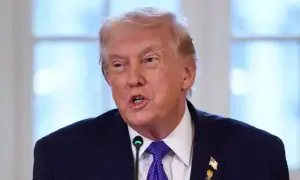
Top US leaders, including President Donald Trump, have condemned the attack, calling it “terror” and “unconscionable,” while expressing support for India without directly blaming Pakistan.
India is an important US partner as Washington aims to counter China’s rising influence. Pakistan remains Washington’s ally even as its importance diminished after the 2021 US withdrawal from neighbouring Afghanistan.
In recent days, Washington urged India and Pakistan to work with each other to de-escalate tensions and arrive at a “responsible solution.” India has blamed Pakistan for the attack. Islamabad denies responsibility and is calling for a neutral probe.
The US State Department has said it was in touch with the nuclear-armed neighbours at multiple levels and Secretary of State Marco Rubio held calls on Wednesday with Indian Foreign Minister Subrahmanyam Jaishankar and Prime Minister Shehbaz Sharif.
“This government is in constant communication,” State Department Spokesperson Tammy Bruce told reporters at her daily news briefing
“We are asking for a responsible resolution from both parties.”
“As the President articulated to Prime Minister Modi last week, the US stands strong with India against terrorism, and Prime Minister Modi has our full support,” she said.
Bruce said Secretary Rubio encouraged both countries to work toward a responsible solution that maintains long-term peace and regional stability in South Asia.
“We continue to be in touch with the governments of both countries, as I mentioned, at multiple levels.”
Hindu nationalist Indian Prime Minister Narendra Modi vowed to punish those responsible and Jaishankar has told Rubio that the perpetrators should be brought to justice. Pakistan says military action by India was imminent.
After the attack, India suspended the Indus Water Treaty, and both countries closed airspace to each other’s airlines. They also exchanged fire across their border.
Pakistani ambassador, UN chief discuss ‘evolving security situation’
Pakistani Ambassador to the United Nations, Asim Iftikhar Ahmad met UN Secretary-General Antonio Guterres on Thursday and discussed the latest developments in the region.
“The discussion focused on the evolving security situation in South Asia as well as the imperative of de-escalation and the efforts being made to that effect,” a press release issued by the Pakistan Mission to the UN said.
“The ambassador reiterated Pakistan’s commitment to regional peace and stability,” it added.
Earlier in the day, UN spokesman Stephane Dujarric was asked at a UN briefing whether Guterres planned on travelling to India and Pakistan.
Dujarric replied that the UN chief had offered his good offices during his phone calls to PM Shehbaz and Jaishankar in the wake of the attack.
“So I don’t think there would be any travel until there’s a clear message that, as in any instance where we have high tensions between two countries, that they’ve both accepted his good offices,” he added.
‘Escalation helps no one’: EU foreign policy chief urges India, Pakistan to ease ongoing tension
Separately, EU’s High Representative for Foreign Affairs and Security Policy and Vice-President Kaja Kallas urged India and Pakistan to defuse the ongoing tension.
She stated on X that she spoke with the foreign ministers of both countries and that “I urge both sides to show restraint and pursue dialogue to ease the situation.”
She remarked, “Escalation helps no one.”

The Foreign Office said Foreign Minister Ishaq Dar apprised Kallas on recent regional developments, categorically rejecting “India’s baseless accusations and inflammatory propaganda”.
He expressed strong concern over India’s decision to hold in abeyance the Indus Waters Treaty, saying it was a clear violation of treaty obligations & international law.
Reaffirming Pakistan’s commitment to peace and regional stability, Dar reiterated Pakistan’s proposal for an independent and transparent investigation.
Kallas emphasised that both sides should exercise restraint and underscored the importance of dialogue to maintain peace and stability in the region. Both sides also discussed Pak-EU relations.