IT is an unenviable ‘achievement’. According to the Global Terrorism Index 2025, Pakistan stands second in the world — just behind Burkina Faso, and just ahead of Syria — in the ranking of countries affected by militant violence. Moreover, according to the index, the banned TTP, which has been waging a bloody campaign against the state and people of Pakistan, ranks among the world’s top four deadliest terrorist outfits.
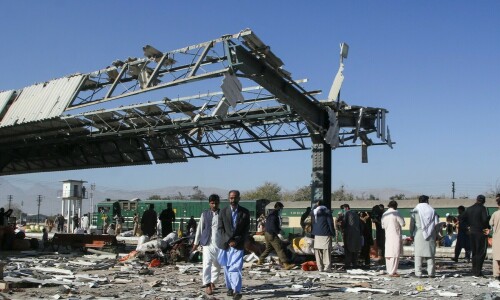
Before protestations are made that such rankings harm Pakistan’s fair image in the world, the data presented by the study needs to be calmly digested. The numbers do not paint a reassuring picture. For example, compared to 517 terrorist attacks in 2023, last year 1,099 such incidents occurred, with half of the attacks carried out by the TTP. The index also confirms that KP and Balochistan are the worst affected parts of the country, suffering 96pc of the attacks. While the TTP carried out the largest number of attacks, it was the proscribed BLA that was responsible for 2024’s deadliest terrorist rampage — the suicide bombing of the Quetta railway station.
The worrying scenario highlighted by the index is reminiscent of the predicament Pakistan found itself in nearly two decades ago, when it was confronting another terrorist insurgency spearheaded by the same malign actors.
Unfortunately, the Taliban takeover of Afghanistan has given great impetus to the TTP and other violent groups to take on the Pakistani state. The terrorism index recognises this, while there can be little denying the fact that militants find safe havens in Afghanistan. For example, the military has said that Afghan nationals were involved in the recent attack on Bannu Cantt.
But what is complicating Pakistan’s counterterrorism efforts is the fact that relations with the Afghan Taliban remain poor. For example, Pakistani and Afghan forces have been clashing for several days due to a border dispute at Torkham. Difficult as it may be, mending fences with the Afghan Taliban is essential to tackling the threat posed by the TTP.
The Global Terrorism Index report recommends that Pakistan take “a combination of military, political, and socioeconomic measures” to deal with the militant threat. Yet the political tribes are too consumed by infighting to notice that the country is going through a major terrorism crisis, while other powerful institutions seem more concerned about ‘digital terrorism’ and other such ‘threats’.
The dreams of economic revival and national harmony will be shattered if we do not wake up to the severity of the present terrorist threat. An effective CT strategy — with input from the civil and military agencies, lawmakers, and independent experts — is essential, for focusing on both kinetic tactics and long-term goals. Cooperation with foreign partners is also key, as the successful capture of the IS-K militant involved in the Kabul airport bombing has shown.
Published in Dawn, March 7th, 2025