TIME flies, and we fail to realise that someone who had departed has been gone for over a year. Then an event shakes us out of our reverie to remind us of our loss. That is how it felt when Dr Kamleshwer Lohana called to inform me that he was organising a memorial lecture in honour of his father, Vali Ram Vallabh (1941-2023), who enriched our culture and society with his translations.
He perceived his contribution as the bonds he had created between communities. For him, love was the most fundamental essence of being. Unsurprisingly, he chose ‘Vallabh’, meaning ‘lover’, as his pen name. In fact, he was a writer and poet of merit.
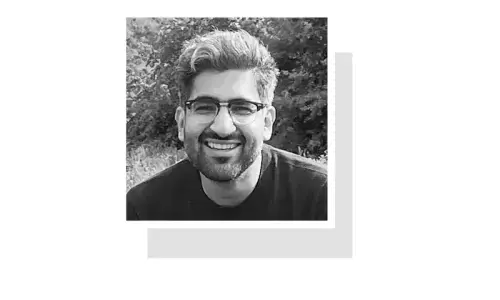
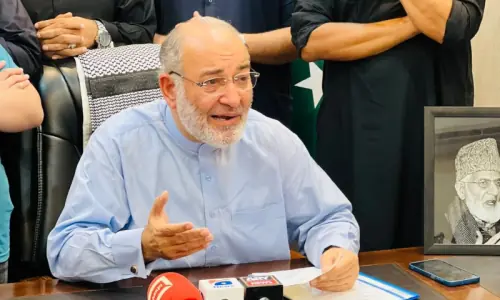
The lecture was held under the aegis of the newly formed Vali Ram Vallabh Literary Society, with City Press founder Ajmal Kamal presiding over the event and HRCP’s secretary general Harris Khalique being the keynote speaker. The two gentlemen are themselves eminent litterateurs, and did justice to the great scholar translator and, more than that, the superb embodiment of the humanism that Vali Ram Sahib was.
The lecture was basically on the genre of translation. Multiple dimensions of the subject came under discussion. The translation of literary works enables people speaking different languages to understand each other’s culture and fosters peace between them. I feel Pakistan has really not benefited from its Vali Rams because we do not have a reading culture, with only a miniscule minority of our 241m population reading books for pleasure. Of course, the high rate of illiteracy contributes to this degrading feature of life.
The books Vali Ram Sahib translated were always his own choice.
The lecture and discussion that followed reminded me of what Vali Ram Sahib had once told me: “The higher the moral and spiritual values of a society, the more it cherishes books. When creative literature is at its peak, translation also flourishes.” Here I would like to add that all literary activity is not a solitary act, as many believe. Even reading — the ultimate culmination of literary creation — involves collective work. To initiate reading, one needs motivation. That comes from another reader — maybe a sibling, friend, teacher, parent or a book group. The post-reading exchange of views on a book is the most stimulating outcome of the reading exercise. Our schools do not ‘waste’ their space and resources on libraries. Can we then expect the reading culture to thrive?
Similarly, writing is also an activity to which many contribute by reading some chapters or discussing a book with the author at the pre-publication stage. The lengthy acknowledgments in books vindicate my point that writing is not a solitary activity either. Of course, the final responsibility is that of the author, as they alone decide what they would like to write when brainstorming opens the floodgates of ideas. The readers’ feedback is always of utmost importance for the author.
For Vali Ram Sahib, such literary activities, which he enjoyed, were a part of the process we call translation. This ultimately led to the bonding of people. In his interview with me, he dwelt considerably on the preliminaries, such as the teachers who taught him in early childhood and helped him discover his talent. There was Rai Chand Rathore, the headmaster of his school in Chelhar (Tharparkar), who inspired his young student by giving him a copy of his own book titled Tarikh-i-Registan.
It would appear that learning and enlightenment became his passion and drove him on. Three Master’s degrees in Urdu, sociology and mass communications, and an LLB, along with his love for languages (Dhatki, Sindhi, Urdu, Sanskrit, Punjabi, Persian and English), paved the way for the bonding process that Vali Ram Sahib launched. It was singularly his own effort.
Even selecting the book he would translate was a part of this process. He would not compromise on his values. Hence he never translated a book as a professional assignment that had to be done.
The books he translated were always his own choice. It had to be a book with values that he shared.
What were these values? Egalitarianism, progressivism, feminism, respect for people’s dignity, peace and love. It was not simply a mission to promote understanding of the culture and lifestyle of communities speaking other languages by translating their literature to create bonds between them.
He was, in this way, also propagating the ideals mentioned above, which permeate his own short stories and poetry. A poem he wrote for his daughter Gauri on her birthday reflects his liberal views on the empowerment and autonomy of women.
“The kite you are flying/ is perfectly positioned/ Now remain focused on it/ As you let your children hold it/ Keep the string firmly in your hand.”
Published in Dawn, November 15th, 2024