0
0
THE Iran-Israel shadow war has very much come out into the open. Tel Aviv had been targeting Tehran’s assets for over a decade, particularly in Syria, taking advantage of the chaos engendered by that country’s civil war. Moreover, a number of Iranian scientists, especially those associated with the Islamic Republic’s nuclear programme, had been assassinated within Iran in hits widely considered to have been orchestrated by Israel.
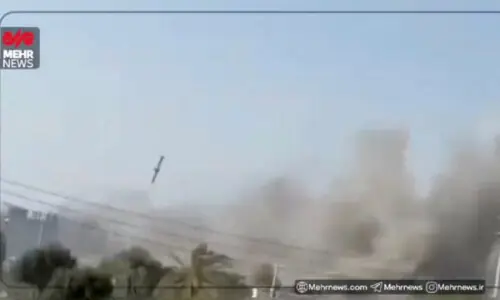
While the Iranians are known for their ‘strategic patience’, and for playing the long game, the April 1 Israeli strike on an Iranian diplomatic facility in Damascus, in which a number of senior Iranian generals were killed, had crossed a red line. There was tremendous pressure on Iran from within to reply to this Israeli transgression, and the ayatollah and his generals had to respond without triggering a major regional war. Tehran’s response came in the shape of the April 13 assault on Israel, a barrage that was short on destructiveness, yet scored a major strategic and PR victory for Iran. The suspected Israeli strikes targeting Iranian facilities in Isfahan early on Friday are the latest move on this dangerous chessboard.
While Tel Aviv has officially kept mum about the Isfahan misadventure — Israel rarely owns up to subterfuge outside of its borders — some politicians in the Zionist state have celebrated the attacks, while American media, quoting sources, have said this is Israel’s handiwork. The Iranians themselves appear to be downplaying the event, and an airbase and nuclear facilities in the area seem to be safe.
Once again, the clamour for ‘de-escalation’ has been echoing from global capitals. Surely a wider war is in no one’s interest — except perhaps for the extremists in Israel — but true de-escalation means Israel must start behaving like a normal state, not a rogue nation that threatens the entire region, as well as the forsaken Palestinians captive in the occupied territories.
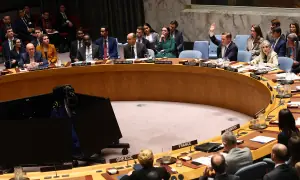
The UN secretary general has said “one miscalculation … one mistake, could lead to the unthinkable”. But this is perhaps just what Benjamin Netanyahu and the cabal of zealots in the unruly coalition that backs him may want. After all, Israel has been facing global opprobrium for its butchery in Gaza, while PM Netanyahu is facing significant domestic opposition for his handling of the debacle.
Thus, a war with Iran may be a useful distraction to shift the focus from Palestine, and rally Israel’s Western friends behind it to protect the Middle East’s ‘only democracy’ against Tehran. Suffice to say, any scenario pitting the Israeli-Western collective against Iran and its ‘axis of resistance’ allies will result in an explosion in the Middle East, causing oil prices to skyrocket, and global trade to be upended. To avoid this, Washington, London and Brussels need to check Israel’s destabilising behaviour.
Published in Dawn, April 20th, 2024