WHEN PIA cancelled several international and domestic flights recently, after grounding five of its Airbus A320 jets because it did not have $100m to ‘immediately pay’ its creditors, many wondered how long taxpayers would have to continue to bail out the debt-ridden airline.
A TV channel quoted a PIA director as warning that the national carrier’s operations could be suspended if emergency funds weren’t provided to pay arrears to creditors, aircraft lessors, fuel suppliers, insurers, domestic and international airport operators and the IATA.
With the company struggling to secure funds, its HR department chief thought it fit to declare during his testimony before a Senate panel that closure of operations and services would “happen only over our dead bodies”.
His emotional outburst shows the kind of opposition the new plan to privatise the bankrupt airline is likely to face from both its unionised staff and executives with a vested interest in retaining the company in the public sector in spite of its huge costs.
Meanwhile, the aviation ministry wants an immediate cash injection of Rs23bn, as well as the suspension of duties, taxes and service charges to domestic agencies to pull PIA out of its money troubles as Boeing and Airbus are on the verge of discontinuing the supply of spare parts.
The government has no choice but to accede to the demand in order to temporarily bail out the company. However, PIA’s problems aren’t going to end with this injection. Sooner or later, it will be in need of more cash.
A report in this paper has rightly compared PIA to state-owned power companies, pointing out that the airline serves less than 3pc of its citizens travelling by air but consumes significant public funds.
In contrast, the highly maligned power companies cater to nearly 80pc of the population. It does not justify the losses of the power companies or delays in their immediate disinvestment. Yet it does underline the reality that the government needs to put its money where its mouth is when it is hard up.
PIA’s debt and liabilities have soared to Rs743bn, which exceeds the value of its total assets by five times, according to the aviation ministry. Its liabilities are projected to spike to a whopping Rs1.97tr and its annual losses to Rs259bn by 2030.
There is no way the airline can be turned around. Too many unsuccessful attempts have been made in the past. The airline is long dead as a corporate entity and brand. Its expeditious privatisation is the only way to reduce the burden on taxpayers and the government budget.
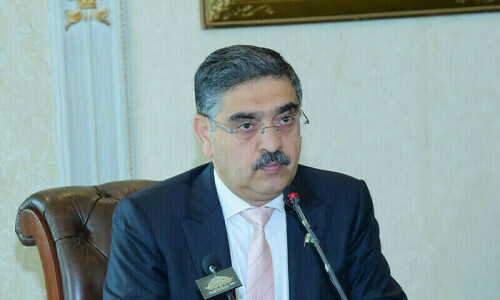
Interim Prime Minister Anwaarul Haq Kakar’s directions to the relevant authorities to fast-track PIA’s privatisation is an encouraging development.
However, it remains a rhetorical statement unless followed immediately by concrete actions.
Published in Dawn, September 16th, 2023