AS the debate over the controversial amendments to the Army Act and Official Secrets Act and their current legal status continues, dark clouds are gathering over the Aiwan-i-Sadr.
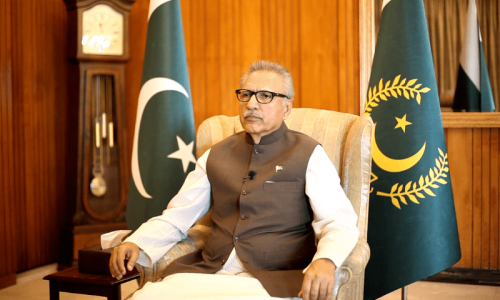
On Monday, following President Arif Alvi’s allegation a day earlier that he had been undermined by his staff, the presidency dismissed its top secretary. While the presidency itself did not really specify why the secretary was dismissed, the contents of a ‘confidential’ letter penned by the officer and leaked to the media suggested that the secretary at least considered the two events to be directly related. Considering the officer’s proposal to take the matter to court to clear his name, the issue could turn very messy for the president if it continues to hang.
According to the leaked letter, the secretary says the president never gave him any ‘written decision’ to either assent to or return the bills to parliament, so he should not be held responsible for ‘delaying’ them. On the other hand, the president had previously claimed that he had asked for both bills to be returned within the stipulated time and was assured during follow-ups that they were.
Considering these contrasting versions, a high-level inquiry into the matter has become necessary. That it does not seem to have been initiated yet makes it all the more intriguing. It also ought to be noted that whatever his position may have been, the president seems not to have put his reasons for opposing the two bills in writing. This would suggest that his own hands are less than clean. His rather laid-back approach is also perplexing. So far, he has only posted a half-baked apology and fired a staff member without assigning any explicit reason.
The question is: what was the president thinking? Had he always wished to play his hand at the last minute, scuttling the laws only when his decision would be difficult to reverse? These two bills appeared to have had some very powerful sponsors backing them. Despite repeated opportunities, our parliamentarians ultimately found them rather difficult to resist despite their earlier protestations. Was the president’s dillydallying followed by a public denial, therefore, a considered strategy to carefully outmanoeuvre those who would have done anything to see these bills enacted?
Alternatively, was it simply that he took a massive U-turn after facing criticism from his party for providing the state with a noose to hang its leaders with? Or, finally, was it that he genuinely opposed these bills and wanted them reviewed but was undermined by his subordinates, who may have been acting on somebody else’s orders? It is critical that the nation gets to the bottom of this fiasco, and it is the president’s responsibility to have the record set straight.
Published in Dawn, August 23rd, 2023