UNITED NATIONS: The United Nations is ready to take ‘baby steps’ towards recognising the Taliban as it considers options to persuade Afghanistan’s de facto rulers to soften their attitude towards women.
For reviewing the option, and its repercussions, UN Secretary General Antonio Guterres will host a meeting of special envoys for Afghanistan from around the world in Doha on May 1.
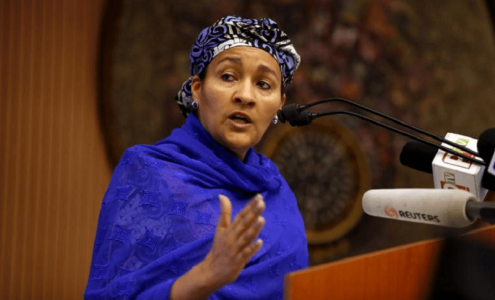
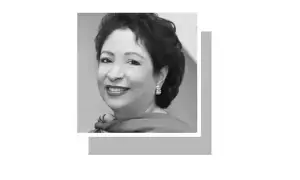
UN Deputy Secretary-General Amina Mohammed told an audience at the Princeton School of Public and International Affairs (SPIA) this week that the Taliban’s desire for recognition provides an opportunity for engaging it on various issues.
“We’ll gather them now in another two weeks in the region, (at a) meeting of envoys across the board — the region and internationally — with the secretary-general for the first time,” she said. “And out of that, we hope that we will find those baby steps to put us back on the pathway to recognition.”
Secretary general to host meeting of special envoys in Doha on May 1; spox dispels impression of ‘leaving’ Afghanistan
She added: “Is it possible? Don’t know.”
Her comments, however, surprised the interviewer, SPIA’s dean Jamal Amaney. “Recognition of?” she asked.
“Of the Taliban. A principled recognition. In other words, there are conditions I mean,” Ms Mohammed replied.
“Quid pro quo?” Ms Amaney asked. “Let’s see, let’s see what that does. Because that discussion has to happen,” Ms Mohammed replied.
The deputy secretary general noted that there were some in the international community who “believe this can never happen. There are others that say, well, it has to happen”.
Asked if the Taliban regime was seeking recognition, Ms Mohammed said: “Yes. The Taliban clearly want recognition. And that’s the leverage we have” for persuading them to change their attitude towards women and on other issues.
Ms Mohammed did not give a specific date for the meeting but Zalmay Khalilzad, the former US special envoy for Afghanistan who negotiated the US-Taliban deal, said the meeting will be held in Doha on May 1.
In a series of tweets, he recommended four measures for the meeting to consider, which include “full implementation” of the agreement he negotiated. “The agreement has not been fully implemented, and no alternative has comparable broad support,” he wrote.
He urged the Secretary-General and the envoys to hold a session with the Taliban to consider a roadmap for the implementation of the agreement. “The roadmap must address the issue of women’s education and employment,” he added.
As a follow-up to the meeting, he urged the Secretary-General to appoint a personal envoy to work with Afghans and the relevant internationals in developing and implementing the roadmap.
UN to stay in Afghanistan
Separately, at a news briefing in New York, the Secretary General’s spokesperson Stéphane Dujarric refused to endorse a statement by another UN official, Achim Steiner, that the United Nations would withdraw from Afghanistan if the Taliban regime did not allow Afghan women to return to work and schools.
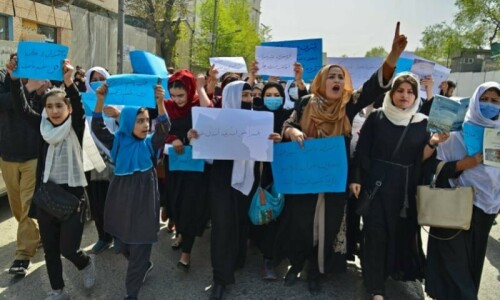
On April 12, the Taliban also stopped Afghan women from working for the United Nations and asked its 600 female employees to stay home. Mr Steiner, who heads the United Nations Development Programme (UNDP), told reporters that the United Nations was ready to take the “heartbreaking” decision to pull out of Afghanistan in May if Taliban did not allow Afghan women to work for the organisation.
But Mr Dujarric said the UN had no plans to leave Afghanistan.
“We are staying in Afghanistan. We are committed to do whatever we can to deliver for the people of Afghanistan,” he said. “We have been present in Afghanistan, I would say continuously, since the creation of United Nations, and that includes the worst period.”
Mr Dujarric, however, confirmed that the UN will review its options for staying in Afghanistan on May 5.
“We are reviewing how we can do our work and how we can do it while respecting International Human Rights Law,” he said. UN officials have said earlier that the restrictions placed by the Taliban, particularly the ban on its women employees, was against the UN charter and violates basic human rights.
“While respecting the charter and while delivering humanitarian aid in an impartial way according to our principles, we’re trying to see how we thread that needle,” Mr Dujarric said.
Published in Dawn, April 20th, 2023