37
37
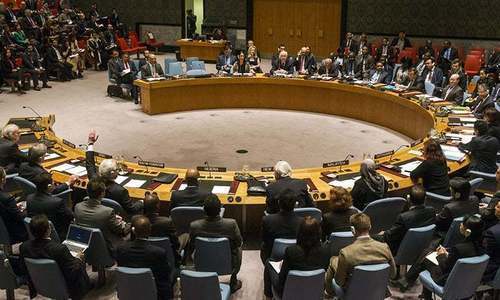
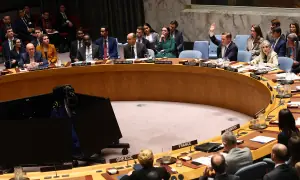
A CLOSED-DOOR, single-point agenda meeting that excludes the parties to the dispute from the deliberations, allows much room for interpretation — at least until matters become clearer.
Read: UNSC Kashmir moot gives lie to Indian claim
Notwithstanding the premature gloating from across the border, there are some positive takeaways from Friday’s UN Security Council meeting on India-held Jammu & Kashmir.
For one, this was a rare event, the very first such gathering to exclusively discuss the disputed area. By doing so, the global body has indicated that the revocation of India-held Kashmir’s status is not India’s ‘internal matter’ as the latter would have the world believe, but a development with dire implications for the region and beyond. In fact, what little has emerged from those privy to the discussion is that the UNSC is concerned over the situation spiralling out of control. Several diplomats at the meeting said as much in remarks to the media later, with the Chinese envoy asking Pakistan and India to “refrain from taking any unilateral action that might further aggravate the tension there since the situation is already very tense and very dangerous”.
Nevertheless, calls for restraint — while eminently pragmatic given that IHK has long been a bone of contention between two nuclear-armed neighbours — fall far short of a robust response, although China was comparatively more forceful than other countries in its support for Pakistan’s position. And while joint statements are not expected from informal consultations such as the one on Friday, the participants refrained from calling an emergency session, something that Pakistan had wanted. The UNSC members are correct in urging Pakistan and India to resolve the dispute in a peaceful manner. However, for the world to accept India’s stance that this be done bilaterally would be to deny the facts on the ground, including the obduracy with which Pakistan’s repeated attempts at talks have been rebuffed, especially under the Modi government.
The apathy is deeply disappointing though not unexpected.
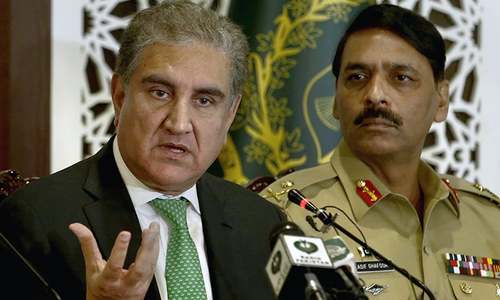
As Foreign Minister Shah Mehmood Qureshi said in a press conference last week, the international community — in thrall to its financial interests — is unlikely to come out with guns blazing against India’s revocation of Article 370. So it has proved, at least thus far.
As for Pakistan, it has not over the years laid the diplomatic groundwork that could sustain its position on IHK when push came to shove — such as now. Instead, flawed, myopic policies that clear-sighted politicians and opinion makers repeatedly warned against, compromised its standing in the world and gave India space to discredit the Kashmiri freedom struggle. As matters stand, it can be argued that Pakistan should have taken the time to engage with the international community and build up more pressure on the diplomatic front before asking for a UNSC emergency meeting. Nevertheless, the only way ahead is to continue to press for a just hearing on IHK from the world.
Published in Dawn, August 18th, 2019