This piece was originally published on February 1, 2026.
The Outside Edge column is vehemently against the proliferation of legalised gambling in sports: from its easy access through apps, to its integration into broadcasts and podcasts, to its consequences on domestic abuse, bankruptcy and betting scandals.
But when I saw that the odds for Pakistan winning the upcoming T20 World Cup were +1400 (in the US, that’s how 14:1 odds are presented, presumably to obviate the average American’s preference to not do maths), I was very tempted indeed to put down a cheeky $100. With such odds, Pakistan only has to make the semi-final for the bet to pay off handsomely.
Dawn’s Legal Office has determined that I cannot confirm whether I gave in to this temptation. But I’m going to go out on a limb and suggest that those odds underrate our chances. The “smart” money has evidently already pencilled in the semi-final spots and, surprise, they don’t include us. India (+135), Australia (+400), England (+450), and South Africa (+500) are clearly in a tier of their own, above one that includes us, New Zealand (+1,600), West Indies and Afghanistan (+2,000 each).
Famous last words, perhaps, but my gut tells me we’re better than that. I don’t really think we’re going to win the whole thing — India is scary good (if Abhishek Sharma bats longer than five overs, it’s basically a guaranteed win) and ICC Tournament Australia will always be ICC Tournament Australia — but I don’t think 14:1 is fair either. Weather and rain permitting, I’d be pretty disappointed if we didn’t make the semis. After that, who knows?
Pakistan is not among the fancied sides for the upcoming ICC Men’s T20 World Cup starting on February 7. In fact, the odds are stacked against us even reaching the semi-finals. But could the odds-makers be underrating our chances?
The most important thing in our favour is that this team has had a lot of reps. And not just reps, but reps in the right locations with the right tactics and with, mostly, the right results. From the time of his appointment in May 2025, Mike Hesson has had a whopping 31 games to tinker and get his combination right. 28 of his 31 games have been in Asian conditions, regularly on wickets where 140 was a winnable total, 150 a good one, and 165 imposing, exactly the range of scores we can expect in Sri Lanka.
We have won a very impressive two-thirds of these games, a stark contrast to the doldrums of the preceding three years, and looked like a reasonably competent and modern T20 side. Give credit to the PCB’s scheduling department for providing Hesson a lot of matches to figure it out, manufacturing relatively high-stakes moments with a pair of triangular series alongside the insane pressure cooker that was the Asia Cup.
It’s not just how many, and where, but also the who. In Hesson’s 31 matches in charge, the following five players have played at least 28: Agha, Saim, Faheem, Nawaz and Farhan.
Faheem and Nawaz are, by any metric, the two outstanding contributors and MVPs of the Hesson era. Saim has been hit-or-miss with the bat, a torrid Asia Cup followed by scores that were improved but a notch below what his most ardent fans, such as yours truly, know he is capable of. But his huge contributions with the ball (the world’s second-best all-rounder behind Sikandar Raza in the ICC rankings), alongside his safe hands, makes him an automatic starter.
Farhan is our only representative in the upper echelons of the global batting rankings, exemplifying a much-needed fearlessness atop an order traditionally plagued by circumspection. If the guy isn’t afraid of Bumrah, he’s not going to be afraid of anyone.
But then there’s our captain, the weakest link. Agha deserves a lot of credit for leading a tactical revolution in a country that abhors anything resembling modern, data-driven thinking. He has also acted with utmost grace in circumstances (cough, Asia Cup, cough) that would test the very best amongst us. He’s a good, safe fielder in a side that needs every single one it can muster.
But his failures with the bat have been glaring. There were promising green shoots at the tail-end of this run-up to the World Cup, with some significant impactful runs in his last five innings, but the larger sample size has not been encouraging. He doesn’t have to be the world’s best player in this tournament for us to do well, but he can’t be what he has been for most of this Hesson run.
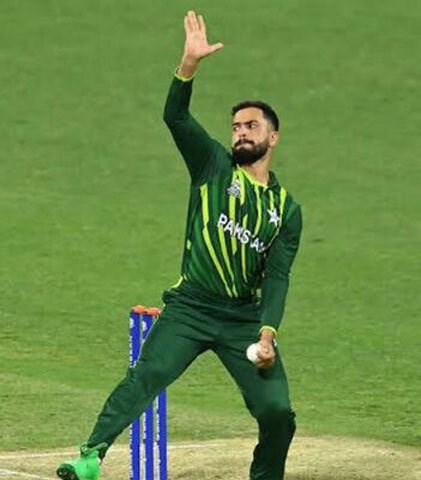
And if we’re going to carry one passenger, we certainly cannot afford two. In the 2021 T20 World Cup, Babar Azam was the Pakistani that opponents least wanted to see on the team sheet. Five years later, there is no one they would rather face up to.
Through a combination of pig-headedness and a skill gap, Babar simply has not been able to develop into the type of modern T20 batsman that can hit good bowling for boundaries, inside or outside the powerplay. His fall from grace was recently encapsulated brutally in Australia, under the harsh glare of an ethos that values the team above uncle-style “do you know who I am?” tantrums.
There are videos freely available on the internet where one can find Mike Hesson in his previous incarnation, before his tenure as Pakistan coach, being refreshingly (and accurately) critical of the Babar/Rizwan approach in T20 cricket. Islamabad United coach/YouTube analyst Mike Hesson knows that Babar has changed nothing substantial about his game since then. But, somehow, Pakistan coach Mike Hesson may not just play him, but be forced by a sycophantic press corps to wax lyrical about his value. Such are the ways of cricket in Pakistan.
In any event, even if it won’t be Babar, it will be Fakhar, which in many ways is not better. A left-hander in the top order is always nice to have. A six-hitter even nicer. A guy unafraid of any opposition or any occasion nicer still. Fakhar is all of these things. The problem is that you add up all those qualities and end up with a guy that strikes at 125, despite getting a lot of powerplay deliveries to play.
So, admittedly, three and four are big holes in our T20 team. If you’re interested in making noise in a knockout tournament, it’s really, really not the part of the side where you want a soft underbelly.
But what gives me confidence is that the rest of the team has match-winners in almost every position who, on their day, can turn a game. The openers may not have high averages, but they have a high rate of impactful partnerships — consistently getting at least 25 or 30 in the powerplay at a RR above 10. Nawaz and Faheem, it bears repeating, have been absolute gold dust with impactful runs and overs; if they play the next few weeks the way they have the last eight months, they will turn the heads of a lot of casual followers.
The spin department, between two world-class options in Abrar and Usman, alongside depth that conceivably allows for 20 overs of spin (Nawaz, Saim, Shadab, and Agha are all guaranteed starters), is the best we’ve had in a long time, and is arguably our biggest advantage, especially considering the location of our games.
Finally, with Naseem, Pakistan have a top death bowler. If Shaheen is slow out of the gates or carrying the after-effects of his injury — can we please not ruin him again by rushing him back for a third time? — Salman Mirza is a more than capable replacement.
Hesson, Agha and Co have done most of their homework right. But exam week is always a different challenge. Here’s wishing them the very best.
The writer is an associate professor at the Schar School of Policy and Government at George Mason University in the US.
X: @ahsanib
Published in Dawn, EOS, February 1st, 2026