Scholar says US unilateralism opens doors for new economic order
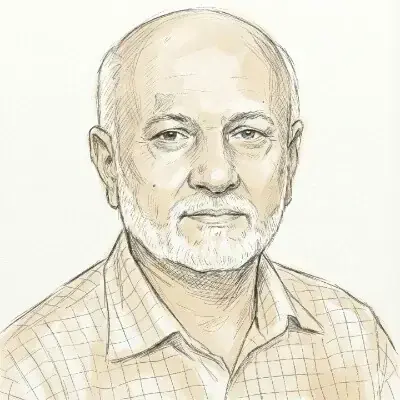
ISLAMABAD: A research scholar at the SOAS University of London has suggested dismantling of the multilateral trade system and replacing it with a “New International Economic Order” since the tariff measures adopted by the United States have sent shock waves across the globe.
The need for a new global economic order is far more urgent for developing countries, for whom any reasonable form of multilateralism is infinitely better than the “law of the jungle” that had prevailed before World War II, Ha-Joon Chang, an economics professor, wrote in a report of the United Nations Committee for Development Policy. The committee is a subsidiary of the Economic and Social Council (ECOSOC).
“The dismantling of this system will not bring manufacturing back to the United States on a scale comparable to declared political ambitions, given the size of the US economy and the way its financial system works today, which prioritises shareholder profit over investment,” Prof Chang observed.
Many developing countries are being hurt by the trade policies of the United States. However, the US is no longer as important a player in the world economy as it used to be, and its withdrawal from the multilateral trade system opens space for new configurations and prospects for greater participation of developing countries, Prof Chang said.
Faced with withdrawal of the US from the multilateral order and the resulting undermining of the system, countries will want to build another multilateral structure. “While an ideal system includes every country, it is not impossible to move ahead without the participation of the United States,” Prof Chang added.
For developing countries in Asia and South America, China is now the biggest trading partner, while the biggest trading partner for African countries is either the European Union or China.
If the multilateral system is not functioning in the way the United States wants, its dismantling will do little for the country. Breaking with the system, in particular through new tariffs, will not bring manufacturing back to the United States on a massive scale, the scholar cautioned.
The United States currently produces only 16.9 per cent of global manufacturing output, compared to 29pc back in 1985 and over 60 pc during the late 1940s.
“To go back just to a situation similar to the 1980s, US still needs to double its share of the global manufacturing output.
“Even if the country starts manufacturing at twice the speed with which it lost it, it would take nearly two decades to go back to the levels of the 1980s,” he said. Prof Chang thinks investment in the US by South Korean, Japanese and European manufacturers would do little to accelerate this process.
Change from within
The size of the US economy is such that it cannot rely on other countries to rebuild it. The changes have to come from within, but the capacity for domestically-driven change is constrained by the fact that the US capitalist class is neither willing nor able to rebuild the economy, even with the help of high protectionism and government subsidies.
In the longer run, the US policies are likely to have positive results for developing countries through their impact on the global economic system. The recent events have made other countries dare to imagine a world economy without the United States. Over time, however, even currently friendly countries are likely to scale down their engagements with the United States due to the erosion of trust generated by its recent actions.
At the same time, the importance of developing countries in the global economy has increased substantially in the last few decades. Along with the increase of South-South trade, China, India, Turkey, and other developing countries are emerging as important international financial actors - in lending, foreign aid, and foreign direct investment (FDI).
This opens a new opportunity for developing countries to draw up a new agenda for the reform of the global economic system. The agenda may be called New New International Economic Order (NNIEO) in that it builds on the New International Economic Order (NIEO) that the Southern countries had collectively proposed half a century ago, in 1974.
The NNIEO will be based on many of the principles of the NIEO, especially the “right of every country to adopt the economic and social system that it deems the most appropriate for its own development and not to be subjected to discrimination of any kind as a result”5. It will also adopt concrete proposals regarding natural resource sovereignty, regulation of transnational corporations (TNCs), reform of the international financial system, knowledge transfer, and South-South cooperation that the proponents of NIEO advocated in the ‘Declaration’.
As for the developing countries themselves, since the 1980s, political solidarity between them has been significantly weakened. Therefore, if they are to facilitate the construction of an NNIEO, they will first have to forge a shared outlook and strengthen their political cooperation. This will not be easy. However, the material basis for South-South collective action is higher than ever, with the increasing economic interactions in terms of trade and investment amongst the Southern countries.
Published in Dawn, November 29th, 2025