Unilateralism risk

UNILATERALISM was discouraged after World War II through the creation of a rules-based world order. But it is now emerging as the new normal in global politics. States are increasingly preferring a unilateral approach to protect their strategic or economic interests, over cooperative mechanisms.
There are several reasons for this. First, the weakening of a rules-based world order has significantly affected the behaviour of nations. In fact, unilateralism is a by-product of weakened international law, where states have less fear of being held accountable by the international community.
Secondly, the emergence of some powerful countries in various regions has also led to this shift. Unilateralism translates into actions when, in their strategic calculations, states conclude that they have achieved adequate political clout, economic influence and strategic superiority against their opponents to unilaterally achieve their objectives.
Third, unilateralism is becoming a symbol of prestige and a tool to divert the public’s attention from governance. In fact, unilateralism has become a symbol of a muscular foreign policy approach, especially in the Middle East and South Asia. For instance, Israeli Prime Minister Benjamin Netanyahu launched Operation Rising Lion against Iran. Similarly, Indian Prime Minister Narendra Modi used the slogan ‘Hum ghar mein ghus kar maarenge’ (we shall go into their homes and strike) in reference to Pakistan.
Doors to diplomacy are being shut.
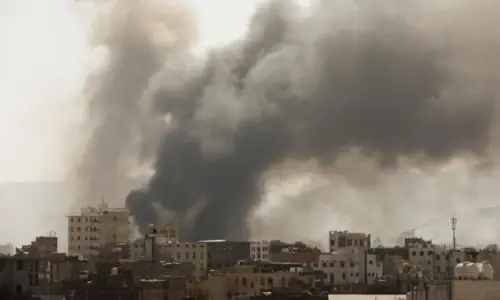
There are several other examples in recent history of unilateralism in world politics. France launched Operation Serval in Mali in 2013. Russia annexed Crimea — which was part of Ukraine — in 2014 and then invaded Ukraine in 2022. Israel’s aggression against Gaza, Lebanon, Syria and Iran from 2023-25 and India’s drone strikes in Myanmar in 2025 can be added to these examples of unilateralism.
In fact, New Delhi has taken several unilateral decisions such as boycotting the Saarc summit of 2016, conducting strikes on Balakot in 2019, abrogating Articles 370 and 35A relating to occupied Kashmir in the same year, and holding in abeyance the Indus Waters Treaty in 2025 after the Pahalgam terror attack. These actions have not only added layers of complexity to the Pakistan-India relationship but have also jeopardised regional peace and security. The boycott of the Saarc summit in Pakistan significantly dented the essence of regional cooperation in South Asia.
India’s repeated unilateral military actions have led to a perceptible shift in Pakistan’s own strategic outlook. In Islamabad’s evolving assessment, the space for patience is narrowing, particularly in the face of deliberate provocations. If the pattern of unilateral aggression continues, Pakistan may feel compelled to revisit its traditional posture of ‘reactive deterrence’. Pre-emptive action is increasingly being viewed in Islamabad as a legitimate option of self-defence in a volatile and asymmetrical security environment.
In a broader context, the implications of unilateral actions are complex and hazardous. First, when democratic states act unilaterally, they often shut the doors to diplomacy as such actions are driven by domestic political objectives. Democratic leaders then fall into a commitment trap where reversing these decisions can amount to political suicide. Even with public support, they are unable to undo unilateral or illegal moves, and feel reluctant to pursue ceasefires or dialogue. Examples include Netanyahu’s repeated rejection of a permanent ceasefire with Hamas and Modi’s refusal to resume talks with Pakistan.
Secondly, the assumption of taking unilateral decisions without incurring re-ciprocal costs is a dangerous gambit that could backfire as seen in Operation Sindoor.
Third, unilateralism is further eroding the trust of weaker states in a rules-based international order. This has triggered a surge in defence procurements, especially among states that have faced unilateral actions by hostile neighbours. Iran and Pakistan, for instance, remain concerned about future crises with Israel and India respectively, and are focusing on defence preparedness. Lastly, unilateralism has heightened uncertainty in world politics and reinforced bloc politics. Weaker states are increasingly bandwagoning with powerful nations to safeguard their security and territorial integrity in an unpredictable global environment.
Unilateralism, whether in the Middle East or South Asia, has far-reaching consequences not only for peace and stability in these regions but also global power politics. It is unfortunately fuelling chaos, uncertainty and an arms race in the Middle East and South Asia. In the presence of this new normal, the future of dialogue, sustainable peace and development seems bleak in these regions.
The writer is an analyst of South Asian affairs. The views expressed are his own.
Published in Dawn, August 10th, 2025