Dogs in Chernobyl turn mysteriously blue

Workers caring for dogs in Ukraine’s Chernobyl exclusion zone spotted several canines that had turned completely blue. The nonprofit Dogs of Chernobyl, part of the Clean Futures Fund, said the colour change likely comes from exposure to chemicals, not radiation.
Residents reported the dogs were normal just a week earlier. Despite their unusual hue, the roughly 700 dogs in the zone appear healthy. Authorities are monitoring the situation closely, and hope to identify the exact source of the chemical exposure soon. Meanwhile, the blue dogs have sparked global curiosity and concern among animal lovers and environmentalists alike.
Tibet’s grapevine is the world’s oldest
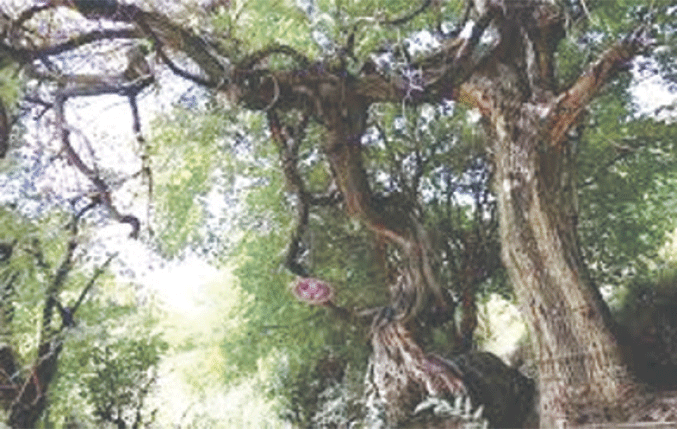
A grapevine in Zuoba Village, Tibet, has been certified by Guinness World Records as the oldest wild living vine at 416 years old.
Discovered during a survey of ancient trees in Changdu city, scientists confirmed its age using ring analysis and measurements. The vine stands 26 feet tall, over two feet in diameter, and grows at nearly 7,900 feet above sea level.
World’s tallest and longest-eared donkeys
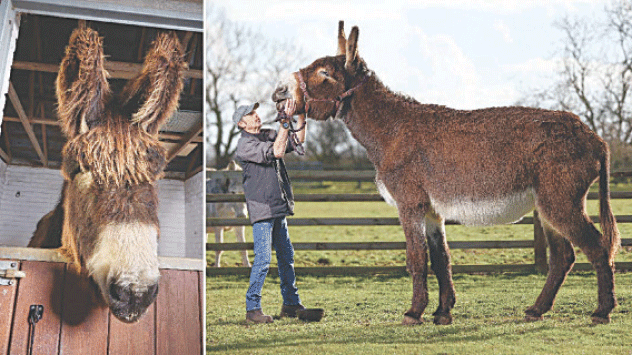
A farm in Lincolnshire, England, is celebrating two record-breaking residents after Guinness World Records confirmed both as the tallest and longest-eared donkeys in the world.
Dynamic Derrick, a resident of the Radcliffe Donkey Sanctuary in Huttoft, stands an incredible 5 feet 5 inches tall from hoof to withers, making him the tallest living donkey. His stablemate, Bambou, earned a record for the longest ears on a living donkey, each measuring 1 foot 1 inch long. Both donkeys were officially measured on the same day.
Tracy Garton, who runs the Radcliffe Sanctuary, said “No one can believe he’s a donkey; they all think he’s a mule because he’s so big.”
Sargassum Belt spreads across the Atlantic
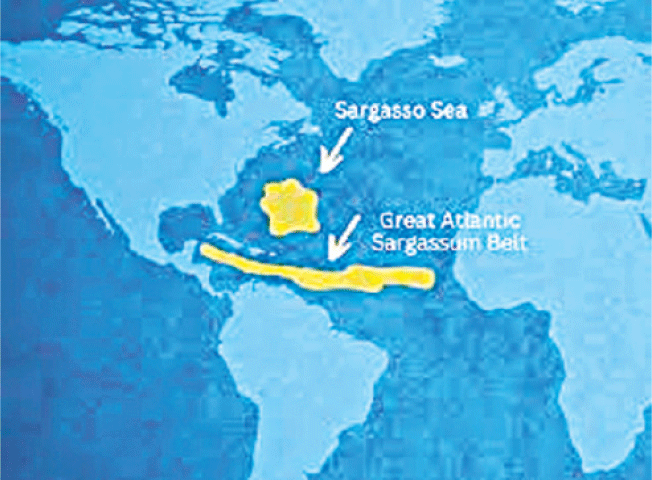
A massive stretch of brown algae, known as the Great Atlantic Sargassum Belt, now spans 8,850 km across the Atlantic Ocean, weighs about 37.5 million tonnes and is visible from space.
First recorded in 2011, the belt has expanded from the Sargasso Sea to form an unbroken stretch from the West African coast to the Gulf of Mexico. Scientists link its growth to rising nitrogen and phosphorus levels caused by agricultural runoff, sewage and waste.
While the floating mass supports marine life, such as fish, crabs and turtles, it also blocks sunlight from coral reefs, releases harmful gases as it decomposes and disrupts coastal tourism and fishing. With ocean temperatures climbing, researchers warn the belt could keep growing, bringing unpredictable environmental impacts.
Published in Dawn, Young World, November 29th, 2025