Water-borne diseases, infections surge in Swat, Buner after flood disaster

SWAT/BUNER: The recent flash floods, which wreaked havoc across Swat and Buner, have triggered a severe public health crisis, with hospitals reporting a sharp rise in waterborne diseases and other infections.
Health officials told Dawn that the cases of diarrhoea, gastroenteritis, cholera, skin infections and respiratory illnesses had surged due to the stagnant floodwaters and the collapse of sanitation systems.
They said children and the elderly remained the most vulnerable groups.
The officials said an emergency had been declared at major health centres across the region, including the Saidu Sharif Teaching Hospital, the largest tertiary care facility in Malakand Division.
Doctors warn risk of disease outbreaks looms
They said health workers at those centres were working round the clock to cope with the rising number of patients, while smaller health units in rural areas were struggling amid damaged infrastructure and acute shortages of medicines.
The officials said one of the most alarming challenges was the shortage of tetanus injections in both Swat and Buner.
They said with many flood victims suffering from injuries and insect or snake bites, the unavailability of the essential vaccine had raised fears of preventable fatalities.
“We are treating hundreds of patients daily with stomach-related and skin problems. Unfortunately, the shortage of tetanus injections is a huge concern because many injured victims are at risk. If these supplies don’t reach us soon, we may lose lives that could easily be saved,” Dr Adnan Khaliq, who leads a volunteer medical team in Mingora, told Dawn.
Similarly, Dr Abdul Basit, a physician working at an emergency camp in Buner, said clean drinking water was unavailable in most of the flood-affected villages, forcing residents to turn to contaminated sources.
“This situation has caused a spike in gastroenteritis and diarrhoea cases. We are doing our best with limited medicines, but the situation is alarming,” he said.
A senior official at Swat’s district health office confirmed the shortage of life-saving medicines.
“We have declared a health emergency at Saidu Teaching Hospital and directed all basic health units and rural health centres to remain on high alert. However, tetanus vaccines and antibiotics are in short supply, and we urgently need federal and provincial support to meet the demand,” he said.
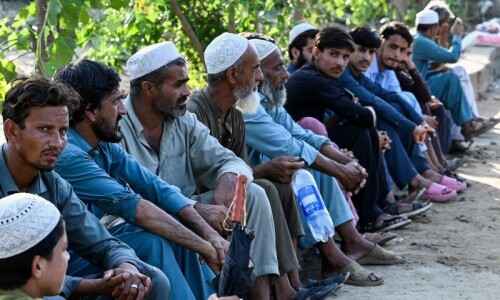
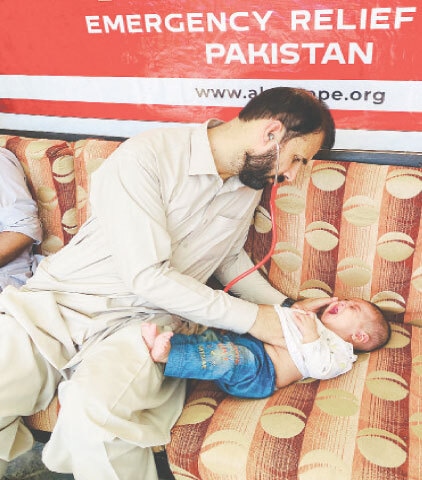
In addition to government-led measures, the Pakistan Islamic Medical Association Swat, in collaboration with Al-Khidmat Foundation, organised a free medical camp at Bangladesh, Mingora, where nearly 100 patients were treated.
PIMA Swat president Dr Abdullah Rashid and general secretary Dr Nasirullah Hamdard supervised the camp.
Dr Hamdard told Dawn that most patients suffered from skin and eye infections, hand and foot injuries, and generalised body aches, while diarrhoea was common among children.
“We are trying to reach as many people as possible with free medicines and treatment,” he said.
Dr Adnan Zaman, a nephrologist who led a volunteer medical team in both Swat and Buner, also voiced concern.
“We are providing emergency health facilities in both districts, but the shortage of tetanus injections and preventive medicines is alarming. Unless immediate action is taken, post-flood epidemics may emerge,” he warned.
While the Pakistan Army and NDMA have mobilised extensive rescue operations in Buner, deploying Rescue 1122 teams, Corps of Engineers, helicopters, sniffer dogs and field hospitals, similar interventions in Swat remain limited.
Residents and health workers said the state’s presence in Swat was minimal, with volunteers and community groups filling the gap.
The provincial government has allocated Rs800 million for flood victims, with Rs500 million going to people in Buner.
Federal authorities have pledged support, including cabinet-level supervision of rehabilitation and directives to expedite relief efforts. However, health camps and hospitals in Swat continue to report shortages of medicines, clean water and sanitation facilities.
Doctors warn that beyond injuries and infections, the risk of widespread outbreaks looms if mobile clinics, vaccination drives and clean water systems are not urgently introduced.
“Skin infections, diarrhoea among children, and eye diseases are rising rapidly. Preventive healthcare and sanitation must be prioritised,” said Dr Hamdard.
The experts also called for long-term solutions, including resettlement of high-risk villages, evacuation from dangerous nullah banks and structural measures to strengthen local healthcare delivery.
As families mourn their loved ones and houses lie in ruins, they said the scale of human suffering demanded a stronger and more coordinated response.
The experts said without urgent interventions in medical relief, sanitation and preventive care, Swat and Buner could face not only destruction from floods but also a secondary disaster of disease outbreaks.
Published in Dawn, August 23rd, 2025