0
0
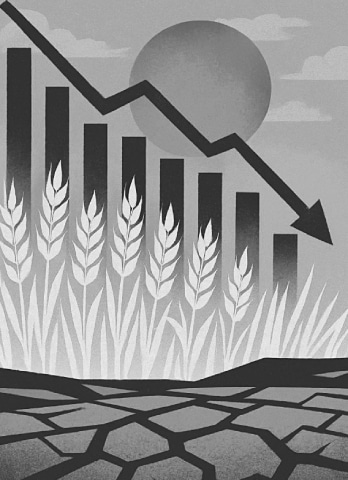
THERE has been a significant reduction in wheat production in the country, which does not augur well for the people. Pakistan had faced a crippling wheat crisis for almost three years, starting from late 2019 and lasting till June 2023, during which domestic wheat and wheat flour prices had skyrocketed, and at one point reached the historical high of Rs7,000 per 40kg bag in different parts of the country. This had prompted the federal and provincial governments to announce policies, like huge and dis-proportionate subsidies and wheat imports.
The wheat imports replenished the wheat reserves and provided governments and consumers a chance to take a sigh of relief as things improved in the latter half of 2023. There was further improvement the following year as the country recorded its highest domestic production of 31.438 million tonnes of wheat in 2024. Together with the carryover stocks of imported wheat, the surplus significantly reduced the prices.
However, the relief had a short-term impact in the face of incoherent policies at the federal and provincial levels, such as erratic imports, delaying wheat support prices, and the rather abrupt decision to end government wheat procurement. Especially, the late decision by the Punjab government of not procuring wheat in 2024 served a serious financial blow to wheat farmers as domestic prices plummeted due to a huge surplus in the open market. This decision threw the farmers completely at the mercy of the exploitative middlemen.
In sheer disappointment, the farming community shifted to canola, vegetables and pulses, thus significantly reducing the area under wheat cultivation. The situation got even worse owing to a long spell of dry season and the resultant stress on the irrigation system. This year, the country’s wheat production has been recorded at 28.5 million tonnes compared to 31.438 million tonnes in the previous year. Carryover stocks of about five million tonnes are expected to fall to about a million tonnes next year. And, in order to fill that gap, the government is likely to import more than 1.5 million tonnes of wheat in 2026.
The lack of national consensus and coherence in policymaking has affected wheat farmers, and the overall agriculture sector is likely to get trapped in yet another vicious cycle. This is a matter of great concern that calls for a holistic approach with a focus on policy coherence.
Policymakers must work to fix the issues arising from fragmented governance and misaligned incentives that plague the wheat sector. Failure to come up with viable and practical solutions, or any further delay to act, will increase import dependence and undermine the nation’s food sovereignty and economic stability. Now is the time for a coherent, farmer-focused and data-driven wheat policy.
Shujaat Hussain Shah
Mansehra
Published in Dawn, August 11th, 2025