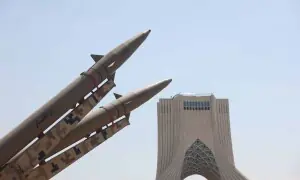
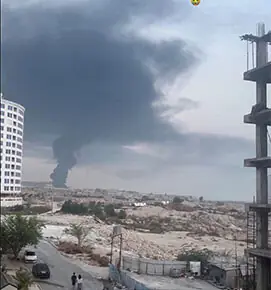
WASHINGTON: The repercussions of Israel’s strikes on Iranian nuclear and military facilities are already reverberating through the Middle East, a top United Nations official told the Security Council on Friday, during an emergency meeting attended by both Iran and Israel.
“I reaffirm the Secretary-General’s condemnation of any military escalation in the Middle East,” said Rosemary DiCarlo, the UN Under-Secretary-General for Political and Peacebuilding Affairs, urging both sides to exercise “maximum restraint” and “avoid at all costs a descent into deeper and wider regional conflict.”
The Council cleared its schedule to address the fast-moving crisis following Thursday night’s strikes, which Tehran has called a blatant violation of its sovereignty. The meeting, still underway at press time, includes statements from all 15 council members and is expected to conclude with remarks by the UN ambassadors of Iran and Israel.
DiCarlo noted that the escalation came just as “some significant diplomatic developments” were underway — including scheduled talks between Iran and the United States in Oman. “Latest reports indicate that Iran will no longer attend,” she said, calling on all parties to “stay the diplomatic course.”
IAEA chief confirms hit on Natanz nuclear site, but indicates no radiation leak
“A peaceful resolution through negotiations remains the best means to ensure the peaceful nature of Iran’s nuclear programme,” she added. “We must at all costs avoid a growing conflagration which would have enormous global consequences.”
Also briefing the Council, Rafael Grossi, Director General of the International Atomic Energy Agency (IAEA), said his agency was in direct contact with Iranian authorities to assess the damage and broader risks to nuclear security.
He confirmed that Iran had reported the Natanz enrichment site was “impacted,” though radiation levels remained unchanged. The Esfahan and Fordow sites were not affected.
“Nuclear sites must never be targeted – under any circumstances,” Grossi said. “Such attacks have serious implications for nuclear security, nuclear safety and safeguards, as well as regional and international peace and security.”
“This development is deeply concerning,” he added. “I have repeatedly stated that nuclear facilities must never be attacked, regardless of the context or circumstances, as it could harm both people and the environment.”
Grossi said he stood ready to travel to the region “at the earliest opportunity” and offered the IAEA as a neutral platform where “facts prevail over rhetoric” and “technical engagement replaces escalation.”
Published in Dawn, June 14th, 2025