Ancient carved faces shed new light on Neolithic society


 0
0
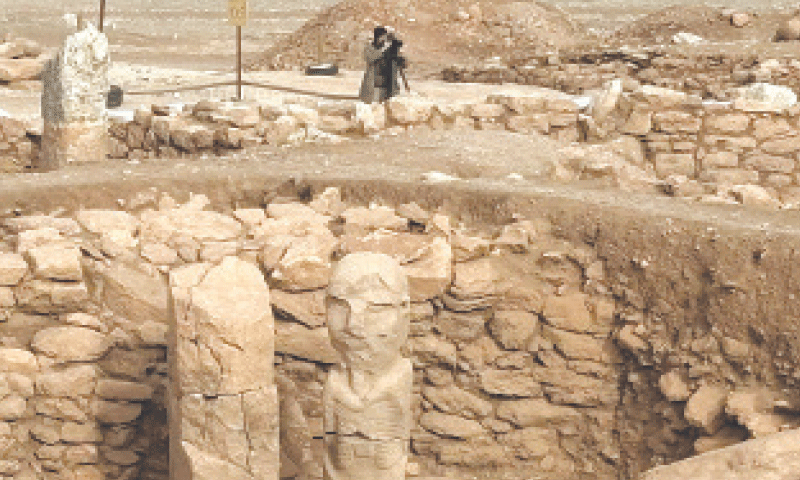
KARAHANTEPE: On the windswept hills overlooking Turkiye’s vast southeastern plains, new archaeological discoveries are revealing how life might have looked 11,000 years ago when the world’s earliest communities began to emerge.
The latest finds — a stone figurine with stitched lips, carved stone faces and a black serpentinite bead with expressive faces on both sides — offer clues about Neolithic beliefs and rituals.
“The growing number of human sculptures can be read as a direct outcome of settled life,” Necmi Karul, the archaeologist leading the dig at Karahan Tepe, said.
“As communities became more sedentary, people gradually distanced themselves from nature and placed the human figure and the human experience at the centre of the universe,” he said, pointing to a human face carved onto a T-shaped pillar.
The excavation is part of Turkiye’s “Stone Hills” project, a government-backed initiative launched in 2020 across 12 sites in Sanliurfa province, which Culture Minister Nuri Ersoy has described as “the world’s Neolithic capital”.
The project includes the Unesco heritage site Gobekli Tepe — “Potbelly Hill” in Turkish — which is home to the oldest known megalithic structures in Upper Mesopotamia, where the late German archaeologist Klaus Schmidt began excavations in 1995.
Explaining some of the new finds on display at Karahan Tepe’s visitor centre, Lee Clare of the German Archaeology Institute says they challenge long-held narratives about humanity’s shift from nomadic hunter-gatherer life to early settlements.
Published in Dawn, December 5th, 2025