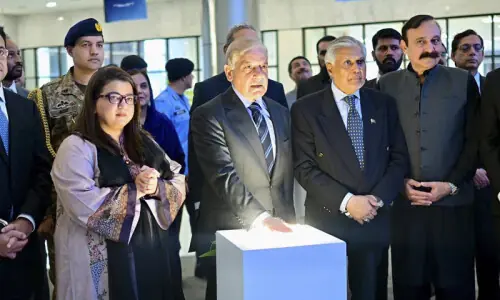
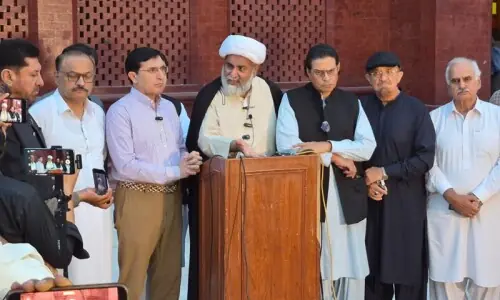
ISLAMABAD: Indian Prime Minister Narendra Modi’s miscalculation and Pakistan’s forceful military response, code-named Marka-i-Haq, have introduced “new inescapable strategic realities” in South Asia, said former senator Mushahid Hussain Sayed at the launch of a new report by the Pakistan-China Institute (PCI) on Saturday.
The report titled ‘16 Hours That Reshaped South Asia: How Modi’s Miscalculation Led to Pakistan’s Primacy’ was released by PCI, a leading think tank founded by Mushahid Hussain Sayed that focuses on China and regional affairs.
Describing the outcome of the recent Pakistan-India military confrontation, Hussain called it “India’s most serious setback since Nehru’s defeat in the 1962 war with China.”
He credited the success of Marka-i-Haq to inter-service coordination, strategic clarity, and the professionalism of Pakistan Air Force pilots, alongside the effective deployment of advanced technology and electronic warfare.
“This was Pakistan’s finest hour since the May 1998 nuclear tests,” said Hussain, citing perfect planning and execution, deft diplomacy by the Foreign Office, and a mature media messaging strategy.
The cover of the PCI report features images of Pakistan’s JF-17 Thunder and J-10C fighter jets, which served decisive blows to Indian Air Force, in flight.
During the launch, Hussain praised China’s steadfast support under President Xi Jinping, calling Beijing “a solid rock” standing with Pakistan. He also acknowledged US President Donald Trump’s role in brokering the ceasefire and in internationalising the Kashmir issue, which he said was “a big blow for India.”
Hussain dismissed the likelihood of a full-scale war, but said the events of May introduced three key strategic shifts: Pakistan’s restoration of deterrence, China’s emergence as a de facto party to the Kashmir dispute and a stabilising force in the region, and the United States’ treating both India and Pakistan as equal stakeholders.
The PCI report lays out a three-pronged strategy for Pakistan’s future, emphasising proactive diplomacy, stronger ties with regional allies including China, Turkey, Azerbaijan, Iran, and Saudi Arabia, and the use of “creative Law-fare” strategies.
These include legal challenges related to the Indus Waters Treaty and actions against India’s RSS-led hindutva policies in international courts. It also stresses the importance of shaping global narratives through media, think tanks, and parliamentary diplomacy.
The report contains a detailed timeline of the conflict triggered by the April 22, Pahalgam terror attack, along with global reactions and historical comparisons of strategic miscalculations by world leaders, including Adolf Hitler’s 1941 invasion of the Soviet Union.
Published in Dawn, May 25th, 2025