Balochistan has increasingly become a focal point in both national and international media due to its deteriorating law and order situation. Insurgency in Baloch-dominated districts has drawn the attention of researchers, prompting investigations into the root causes of dissidence among the Baloch population.
Balochistan, which covers 44pc of Pakistan’s total landmass and housing only 5.9pc of the country’s population, plays a crucial role in the national economy. It is rich in natural resources, including gas, coal, and minerals; boasts a 750km coastline; and holds strategic significance due to its borders with Afghanistan and Iran, as well as the Gwadar Port. However, the province continues to struggle with governance and economic disparity.
Efforts to uplift Balochistan, such as the Aghaz-e-Huqooq-e-Balochistan Package, increased provincial autonomy through the 18th Amendment, and an enhanced share in the 7th National Finance Commission (NFC) Award, have yielded limited results.
Initiatives like the China-Pakistan Economic Corridor and the southern Balochistan package — with a portfolio of Rs600 billion — have yet to bring tangible benefits to the masses. The low progress of the province can be attributed to poor governance, financial mismanagement and inefficient service delivery.
Under-utilisation of development funds has resulted in stagnation across critical development initiatives
Balochistan’s political economy is marred by clientelism, where politicians distribute development funds as political favours, benefiting tribal elites rather than the general populace. This practice has led to high inequality, as highlighted in the United Nations Development Programme’s Pakistan National Human Development Report 2020.
Poor fiscal management further exacerbates the crisis, with over 76pc of provincial revenue dependent on federal transfers. Rising salaries, pension obligations, and employee-related expenses consume a large portion of the budget, leaving limited funds for development.
For FY25, Balochistan’s budget stands at Rs955.6bn, an increase from Rs701.4bn in the previous fiscal year. The province projects a surplus of Rs25.4bn. However, non-development expenditures dominate at Rs609.1bn; 63.7pc of the budget, while development expenditures are limited to Rs321.1bn; 33.6pc.
Moreover, federal transfers account for Rs647bn under the NFC Award, with Rs20.5bn coming from natural resource royalties. Meanwhile, Balochistan’s own revenue generation remains dismal at only 13pc of the total, including Rs47.7bn from taxes and Rs18.8bn from non-tax sources.
A significant portion of the budget is consumed by employee-related expenses, ie Rs308.9bn and pensions amounting to Rs84.8bn, with pension costs projected to reach Rs234.63bn by FY31. Law and order expenses have escalated from Rs55.7bn in FY23 to Rs93.1bn in FY25, potentially reaching higher soon. Additionally, Rs93bn is allocated to local governments, autonomous bodies, and social welfare programmes.
Historically, the development budget utilisation has always been very low; like in FY24, against a development budget of Rs229bn, only Rs125.9bn could be utilised, which shows poor fiscal management.
The under-utilisation of development funds has resulted in stagnation across critical infrastructure and human development initiatives. Although significant resources are allocated to the education and health sectors, their ineffective utilisation has failed to produce measurable improvements in service delivery.
Unrealistic revenue estimates, excessive reliance on federal support, and weak accountability have contributed to financial instability and missed growth opportunities, particularly in resource-rich sectors like mines and minerals, fisheries, agriculture, and livestock. Budgetary inefficiencies are evident, with approximately 20-25pc of allocated funds remaining unspent annually and development budgets experiencing lapses of up to 40pc.
Poor planning in critical sectors like education and health has further deepened inequalities, as substantial funding fails to translate into improved infrastructure or service delivery.
Balochistan’s persistent fiscal mismanagement has led to poor governance and underdevelopment, necessitating urgent reforms to enhance the province’s own revenue generation, control expenditures, and ensure effective fiscal management.
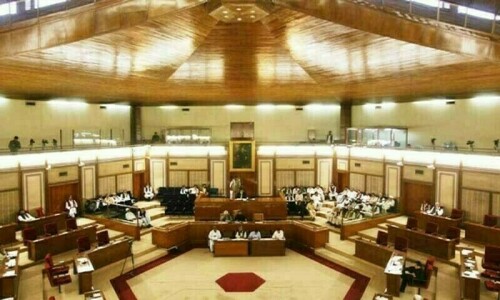
In 2020, the Balochistan Public Finance Management Act was passed by the provincial assembly to regulate the Provincial Consolidated Fund and Public Accounts on modern lines and as per the international standards.
But the diseased political economy did not allow its proper implementation, and it was amended two times, thus making it ineffective.
Moreover, the province must reduce its dependence on federal transfers by developing a self-sustaining economic model that leverages its natural resources.
Strengthening tax collection, implementing accountability mechanisms, and prioritising capacity-driven planning are essential to reversing economic stagnation.
The writer is a provincial civil servant and public policy analyst based in Quetta
Published in Dawn, The Business and Finance Weekly, March 31st, 2025