Sri Lanka train derailed after smashing into elephants


 0
0
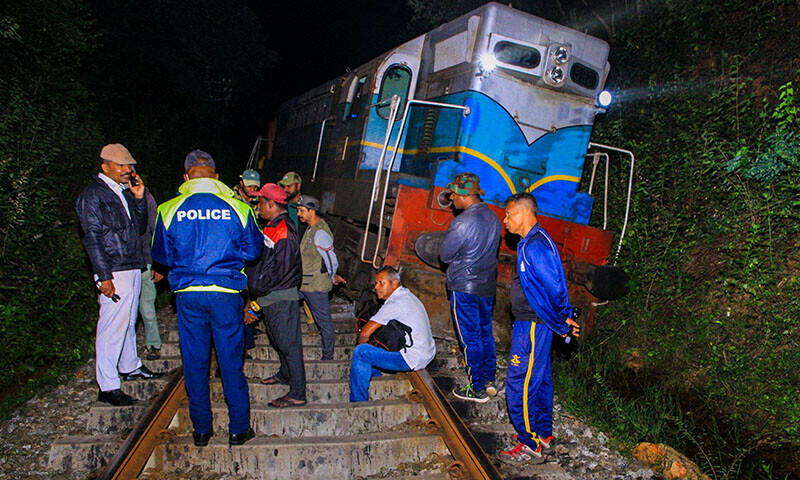
A Sri Lankan passenger train derailed on Thursday after smashing into a family of elephants, with no passengers injured but six animals killed in the island’s worst such wildlife accident, police said.
The express train was travelling near a wildlife reserve at Habarana, some 180 kilometres east of the capital Colombo, when it hit the herd crossing the line before dawn.
“The train derailed, but there were no casualties among the passengers,” police said, adding that wildlife authorities were treating two elephants who survived the crash.
Videos shot after the accident showed one elephant standing guard over an injured youngster lying beside the tracks, with the tips of their trunks curled together.
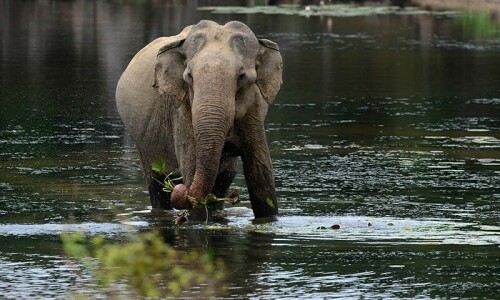
Killing or harming elephants is a criminal offence in Sri Lanka, which has an estimated 7,000 wild elephants, with the animals considered a national treasure, partly due to their significance in Buddhist culture.
Two baby elephants and their pregnant mother were killed in a similar accident by a train in the same area in September 2018.
Since then, the authorities ordered train drivers to observe speed limits to minimise injury to elephants when going through areas where they cross the lines.
The elephant deaths comes days after the authorities expressed concern over the growing impact of conflict between humans and elephants, as the ancient habitat of the animals is increasingly encroached upon.
Farmers scratching a living from smallholder plots often fight back against elephants raiding their crops.
Deputy Minister of Environment Anton Jayakody told AFP on Sunday that 150 people and 450 elephants were killed in clashes in 2023.
That is an increase on the previous year, when 145 people and 433 elephants were killed, according to official data.
Just those two years represent more than a tenth of the island’s elephants.
But Jayakody said he was confident the government could find solutions.
“We are planning to introduce multiple barriers — these may include electric fences, trenches, or other deterrents — to make it more difficult for wild elephants to stray into villages,” Jayakody said.
A study last year detailed how Asian elephants loudly mourn and bury their dead calves, in a report that details animal behaviour reminiscent of human funeral rites.
Elephants are known for their social and cooperative behaviour but calf burial had previously only been “briefly studied” in African elephants — remaining unexplored among their smaller Asian cousins, according to the study in the Journal of Threatened Taxa.
Asian elephants are recognised as endangered by the International Union for Conservation of Nature.
An estimated 26,000 of them live in the wild, mostly in India with some in Southeast Asia, surviving for an average of 60-70 years outside captivity.