Revival? For whom?

NO amount of self-congratulatory full-page advertisements in newspapers on the first anniversary of the Feb 8, 2024, elections, along with television ads showing a benevolent farsighted prime minister giving instructions to a young girl about all that has been achieved for Pakistan’s economic revival, and what yet needs to be done, will hide the deep rot that lies underneath the country’s political, economic and social reality. Celebrating ‘revival’, while understandable under the current political economy dispensation, overlooks fundamental and deep structural issues that undermine any ambition to fly, whether under the Uraan programme or in terms of the growth rate.
Not to spoil the celebrations — for there are grounds which clearly reveal that Pakistan’s economy at least, and importantly, as gauged by a series of numbers, has shown huge signs of improvement over the last few years, and especially since the tumultuous months of spring 2022. The inflation rate is down to its lowest in almost a decade from its highest-ever point just 15 months ago. The exchange rate has been stable for almost two years now, something which shows not just better management but also a considerably improving balance-of-payments situation. In addition, Pakistan is expected to achieve its largest ever inflow of foreign remittances this financial year.
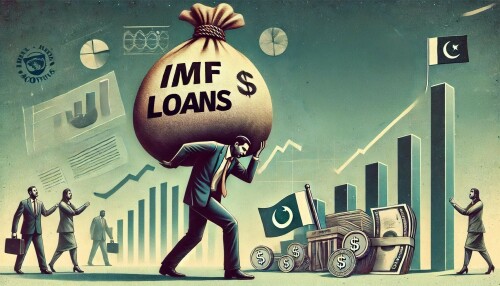
Even the interest rate has been halved over the last many months and there are small signs that credit to the private sector may increase. The world record-breaking 24th IMF programme also seems well on course for its review next month, with the IMF expected to release its second tranche. Since all these numbers look so good, what’s the problem?
The numerous other sets of numbers not quoted by government sources, suggest that things are not as dazzling as the ones claimed by those who run the country. The first fundamental problem lies in the perpetual ‘legitimacy’ question, where it is obvious to all that the party and the leader who won the most votes in 2024 are not in power. Even if we set aside this annoying fact, there are other reasons to think differently where our economy stands today and the directions in which it is headed.
Economist Hafiz Pasha, in a series of articles and interviews, has argued that as much as 44 per cent of Pakistan’s population currently lives below the poverty line — a poverty line which merely allows one to survive on a very basic income. If more than 100 million people live below the poverty line, and since the number has increased over the last few years, whatever ‘revival’ is supposedly taking place has not affected this population.
Moreover, while it is a great relief that the inflation rate is currently under 3pc, prices continue to rise and those who have low and fixed incomes lose out every month. Moreover, Dr Pasha’s calculations show that the current unemployment rate is higher than 9pc. He also shows that the real wage of workers in Pakistan has seen a fall of almost 20pc in the last three years. With marginal growth in GDP over the last five years, these numbers are not surprising, especially when population growth is higher than the economy’s growth rate. If nothing else, Pakistan can celebrate having the highest population growth rate in the world.
Many of these supposedly extraordinary numbers matter little to most Pakistanis.
These numbers counter any claim of ‘revival’ and progress with regard to the economy improving and having a real effect. The numbers look good, but have not translated into real improvement in the lives of the people. But this is just the top of the very large iceberg which hides troubling trends.
In a forthcoming report on productivity in Pakistan, to be released by the State Bank of Pakistan, some key numbers are extremely disturbing. For one, the quality of labour and labour productivity have declined in the last two decades showing serious inefficiencies in production. Pakistan’s savings rate, so crucial for investment, is half that of the rest of South Asia, as is its investment rate. With such low structural and deep trends, low labour productivity and low savings and investment trends, ‘revival’ and progress remain well out of reach.
However, the most disturbing trend which this study reveals, relates to human capital. Pakistan’s secondary enrolment rate today is at the level where South Korea’s was in 1972, while Pakistan’s tertiary enrolment rate today is where South Korea’s was in 1979! These are astonishing numbers showing that in terms of human capital, so critical for the information and technological age, Pakistan is four decades behind South Korea. Not surprisingly, none of the numbers released by the government congratulating itself on its supposedly fantastic performance, show these figures.
Clearly, the economic numbers are better now than what they were just two years ago. Yet, many of these supposedly extraordinary numbers matter little to most Pakistanis. The stock market is the best indicator of such fake exuberance. The stock market may have broken many records each month over the last year or so, but the fact that at best only 300,000 or so individuals invest in the stock market — of which a minute fraction consists of active investors — is ample evidence of which numbers matter and which are completely irrelevant.
Unless economic policy focuses sharply on issues which affect people directly — such as wages and employment equity — these celebrations are meaningless. Numerous MoUs are signed with visiting dignitaries, but they are mere photo-ops; little of substance comes out of these events. With pitiful school and college enrolment rates, especially for girls, with the internet and its technology purposely disrupted, and laws passed that restrict free thought and speech, a key income-earning opportunity for the population is curtailed.
If this was truly a revival, a point of inflection for the future, one should have primarily seen programmes for the 44pc who are below the poverty line, and whose real wages have fallen. The numbers have improved, but the lives of the majority of Pakistanis have not.
The writer is a political economist and heads the IBA, Karachi. The views are his own and do not represent those of the institution.
Published in Dawn, February 20th, 2025