Key Bangladesh party warns over unrest after buildings smashed


The Bangladesh National Party (BNP) has spoken out publicly for the first time against the interim government after a surge of unrest and a sweeping security crackdown.
Police have arrested more than 1,500 people nationwide since Saturday as part of “Operation Devil Hunt”, targeting groups allegedly connected to ousted premier Sheikh Hasina, who was toppled in a student-led revolution in August.
Mirza Fakhrul Islam Alamgir, BNP secretary-general, met interim leader Mohammed Yunus late on Monday to “raise concerns over the incidents that have swept across the country”.
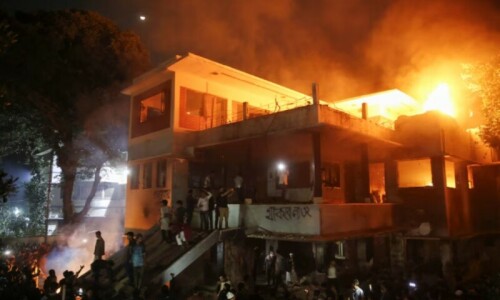
Protesters smashed buildings connected to Hasina’s family using excavators — including a museum to her late father, Bangladesh’s first president — on February 5, six months to the day since she fled as crowds stormed her palace in Dhaka.
Police stood by as protesters torched the building.
“It all happened in front of law enforcement agencies, so the government cannot avoid its responsibility,” Alamgir said.
Those protests followed reports that 77-year-old Hasina, who has defied an arrest warrant to face trial for crimes against humanity, would appear in a live broadcast from exile in India.
There were also clashes between anti-Hasina protesters and members of her Awami League party.
Members of the Students Against Discrimination protest group were attacked in the Dhaka district of Gazipur on Friday. The group, whose members are now in the government cabinet, is credited with sparking the uprising against Hasina.
The vocal and powerful group then demanded action, sparking the security operation with mass arrests countrywide.
“We have seen such drives before,” Alamgir said. “We cautioned the government to protect innocent civilians.”
Human Rights Watch warned last month that the police had “returned to the abusive practices that characterised the previous government”.
Yunus, 84, a Nobel Peace Prize winner, has warned against retaliation after Hasina’s ouster.
“The sacrifices we made were aimed at bringing an end to injustices across all sectors,” Yunus said late on Monday.
“If we engage in the same kind of actions as the fallen regime, there will be no difference between them and us,” he said.