What is the latest science telling us about climate change?


After another record-breaking year for global temperatures in 2024, pressure is rising on policymakers to step up efforts to curb climate change. The last global scientific consensus on the phenomenon was released in 2021 through the Intergovernmental Panel on Climate Change, but scientists say evidence shows global warming and its impacts have since been unfolding faster than expected.
Here is some of the latest climate research:
Critical point
The world may already have hit 1.5 degrees Celsius (2.7 F) of warming above the average pre-industrial temperature — a critical threshold beyond which it is at risk of irreversible and extreme climate change, scientists say.
A group of researchers made the suggestion in a study released in November based on an analysis of 2,000 years of atmospheric gases trapped in Antarctic ice cores.
Scientists have typically measured today’s temperatures against a baseline temperature average for 1850-1900. By that measure, the world is now at nearly 1.3 C (2.4 F) of warming. But the new data suggests a longer pre-industrial baseline, based on temperature data spanning the year 13 to 1700, which put warming at 1.49 C in 2023, the study published in the journal Nature Geoscience said.
Ocean changes
The warming of the Atlantic could hasten the collapse of a key current system, which scientists warn could already be sputtering. The Atlantic Meridional Overturning Circulation (AMOC), which transports warm water from the tropics to the North Atlantic, has helped to keep European winters milder for centuries. Research in 2018 showed that AMOC has weakened by about 15 percent since 1950, while research published in February 2024 in the journal Science Advances suggested it could be closer to a critical slowdown than previously thought. In addition, with the world in the throes of a fourth mass coral bleaching event the largest on record scientists fear the world’s reefs have passed a point of no return.
Scientists will be studying bleached reefs from Australia to Brazil for signs of recovery over the next few years if temperatures fall.
Extreme weather
Ocean warming is not only fuelling stronger Atlantic storms, it is also causing them to intensify more rapidly, with some jumping from a Category 1 to a Category 3 storm in just hours. Growing evidence shows this is true of other ocean basins. In October 2024 Hurricane Milton needed only one day in the Gulf of Mexico to go from tropical storm to the Gulf’s second most powerful hurricane on record, slamming Florida’s west coast. Warmer air can also hold more moisture, helping storms carry and eventually release more rain. As a result, hurricanes are delivering flooding even in mountain towns like Asheville, North Carolina, inundated in September 2024 by Hurricane Helene.
Forests and fires
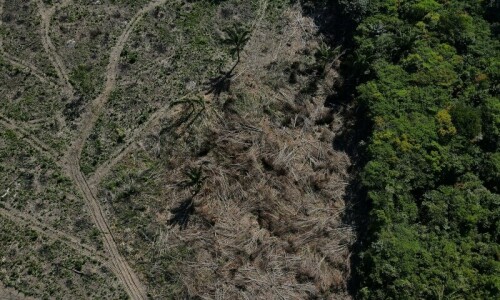
Global warming is drying waterways and sapping moisture from forests, creating conditions for bigger and hotter wildfires from the US West and Canada to southern Europe and Russia’s Far East. Research published in October in Nature Climate Change calculated that about 13pc of deaths associated with toxic wildfire smoke during the 2010s could be attributed to the climate effect on wildfires. Brazil’s Amazon in 2024 was in the grip of its worst and most widespread drought since records began in 1950.
Published in Dawn, January 7th, 2025