Mossad agents claim Hezbollah had ‘exploding pagers’ for decades


 0
0

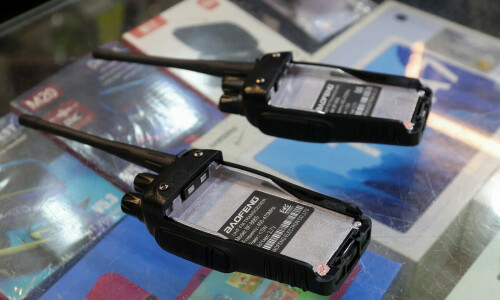
Two former Israeli intelligence agents have revealed how members of Hezbollah used Israeli-made walkie-talkies booby-trapped with explosives for 10 years before they were detonated in a surprise attack in September this year, BBC News reported.
The two ex-Mossad agents told American outlet CBS News how the service duped Hezbollah into buying thousands of rigged walkie-talkies and pagers without realising they were made in Israel.
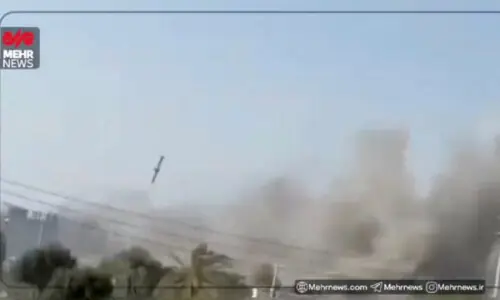
On Sept 17 2024, thousands of pagers simultaneously exploded across Lebanon. The blasts wounded or killed users and some people nearby, spreading panic and confusion. The following day, walkie-talkies exploded in the same way, killing and injuring hundreds more.
Israeli Prime Minister Benjamin Netanyahu admitted that Israel was responsible two months later.
In an interview with CBS News, two men said to be former Mossad agents divulged details of the operation.
One of the agents, referred to as Michael, said Mossad had concealed an explosive device inside the batteries operating the walkie-talkies, which he said would typically be carried in a vest nearer the wearer’s heart.
He said Hezbollah had unwittingly bought over 16,000 walkie-talkies at “a good price” from a fake company 10 years ago.
“We have an incredible array of possibilities of creating foreign companies that have no way being traced back to Israel,” Michael said. “Shell companies over shell companies to affect the supply chain to our favour.
“We create a pretend world. We are a global production company. We write the screenplay, we’re the directors, we’re the producers, we’re the main actors, and the world is our stage.”
The operation expanded two years ago to include pagers, CBS said.
Mossad found that at that time Hezbollah was buying pagers from a Taiwanese company called Gold Apollo, it said. It set up a fake company, which used the Gold Apollo name on pagers rigged with explosives, without the parent company realising.
CBS said Mossad put explosives inside powerful enough to hurt only the user.
“We test everything triple, double, multiple times in order to make sure there is minimum damage,” said the second agent, whom the programme called Gabriel.
It said Mossad specifically chose a ringtone which would sound urgent enough for someone to check in incoming message.
Gabriel said the agency duped Hezbollah into buying the pagers, making advertising films and brochures, and sharing them on the internet.
“When they are buying from us, they have zero clue that they are buying from the Mossad,” he said.
Hezbollah had bought 5,000 of the booby-trapped pagers by September 2024, CBS said.
They were triggered from Israel when Mossad feared Hezbollah began to have suspicions, it said.
Published in Dawn, December 24th, 2024