31
31
THERE has been no claim of responsibility yet, but the timing of the attack on Pakistan’s embassy in Kabul strongly suggests a link with the TTP calling off its ceasefire with the Pakistani state only days ago.
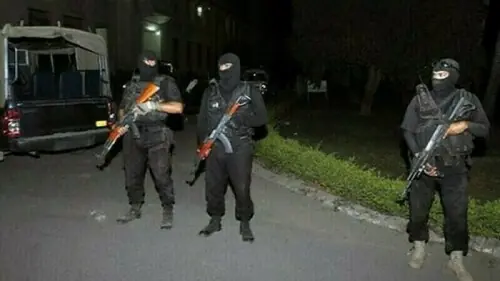
On Friday, the embassy compound came under fire from a lone gunman holed up in a nearby building. The security guard was critically injured while protecting the mission head, Chargé d’Affaires to Afghanistan Ubaidur Rehman Nizamani, who remained unhurt. One suspect has been arrested and two firearms recovered from him.
The Afghan foreign ministry has given assurances of an investigation into the attempted assassination of the Pakistani diplomat and punishment of those behind it. Given such a high-profile incident occurring in its capital, that too in what would be a more secure part of the city, this is the very least the Afghan government would be expected to say.
After all, during the months leading up to its takeover of Kabul, the Afghan Taliban in parleys with the international community reiterated their commitment to crack down on militant groups on its soil and prevent any cross-border attacks.
It soon became clear, especially with the appointment as interior minister of Sirajuddin Haqqani, leader of the Haqqani Network which is known to have close links with Al Qaeda, that any assertive action against extremist outfits was unlikely.
Aside from their ideological commonalities with such groups, Afghanistan’s new rulers may have calculated that following through on its commitment to act against them risked the regime being seen as kowtowing to the West, a perception that could push its supporters towards the self-styled Islamic State, the Taliban’s only real rival on the militant landscape in their country.
The duration of the Afghan Taliban’s regime has thus seen a marked escalation in cross-border attacks by the TTP and other terrorist groups that have taken shelter inside Afghanistan, as well as border clashes between security personnel on both sides. The ill-fated ‘negotiations’ that the Taliban facilitated have unsurprisingly broken down, with the TTP calling for an all-out war on the Pakistani state.
In an already perilous environment, this development put the Pakistan embassy personnel at even more risk and the Taliban should have enhanced the existing security arrangements. The regime has an obligation to keep the diplomatic community within Afghanistan safe from harm; they must realise that the murderous elements they are playing host to are further compromising their international standing.
Published in Dawn, December 4th, 2022