Democracy and dystopia


 15
15

IN Ireland, ordinary people are hoarding firewood, afraid that they will not be able to heat their homes in the upcoming winter owing to the Ukraine-Russia conflict. In Iran, protests against the regime have continued into their fifth week. Last weekend, Evin prison holding political prisoners (which means anyone opposed to the regime) burned, with reportedly some female prisoners on the roof of the prison screaming ‘down with the regime!’ Next door in India, Hindu extremism has become so entrenched, such a delicious intoxicant that now the ruling party is calling for an economic boycott of Muslims. In the meantime, OPEC decided to reduce oil output despite knowing the dire condition of fuel inflation all over the world.
It is undoubtedly a dystopic universe. In Pakistan, we have our own tableau of discordant ‘realities’. Some areas are still under water with displaced women and children dying for want of assistance. The videos of their hapless condition play in a loop on various television channels, even as ordinary people become desensitised to them. ‘What more can we do?’ they wonder, embroiled as they are in their own particular stories of want and desperation. The price of staples has risen exponentially, bloated from unchecked inflation which the government has not been able to control. The much-promised growth phase, as in previous years, is nowhere in sight. The flood relief website asks citizens to donate money, but the numbers also say that only a very tiny percentage of recipients have actually received the help. This is denied by various ministers but there are really no official numbers released that back that claim. If pictures are any evidence, it appears that help has not got where it should.
If this mess weren’t enough to baffle and befuddle, elections were held in 11 constituencies in the country last weekend. The surreal nature of these is that voters had the option of voting for a leader who will not be joining parliament. As the results show, the vast majority did just that. So enfeebled and disenchanted are the Pakistani voters that even non-representation, a nullifying variable in the democratic equation, seems attractive to them.
Nobody in power belonging to any party cares about the ordinary Pakistani’s general disillusionment with democracy, submerged as they are in the details of this or that electoral loss or victory. When the new government came to power a few months ago, politicians continued to rule in their own ethnic constituencies. This model has worked in the past; Pakistanis have voted along ethnic lines with great regularity and continue to do so now. At the same time, demographics have changed this milieu in that patterns of urbanisation have delivered a mixing of various ethnicities that was not present before.
So enfeebled and disenchanted are the Pakistani voters that even non-representation seems attractive to them.
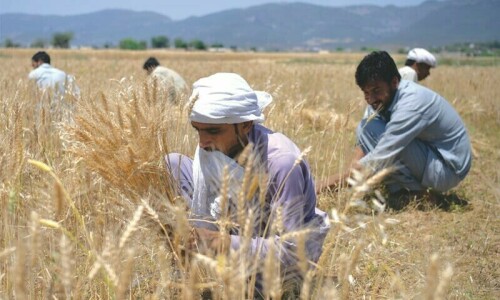
Urbanisation and the improvements in economic conditions that result from it have produced their own kind of Pakistani voter. Those who have moved from villages where their elders are still under the thumb of this or that feudal leader or corporate farm owner or industrial farmer, may be less interested in voting unthinkingly for whatever party their leader belongs to in that moment. This means that the party leaders who have relied on these once-guaranteed seats as bastions of support cannot count on them with the same certainty that was once the case. There is also an argument that funds at the provincial level are being spent unevenly on rural areas where feudal and ethnic ties still provide guarantees and less so on cities. For instance, the current government is trying to expand the agricultural sector even though no tax revenue is extracted from these areas because agriculture (for the sake of guaranteed constituencies) has never been taxed. In the meantime, the urban voter who sees trash piling up, no clean water and constant blackouts is not happy. There was a time when this was true only of Karachi; now it is the truth in every city of the country.
Then there is the complex and pressing issue of being a country in a crisis and in want at a time when so many countries, not least the US and those of Europe, are enmeshed in their own challenges. The attention Pakistan or Iran or Afghanistan could draw is diminished by a global context that is itself dystopian.
If the midterm elections in the US upset, as expected they will, the Democratic majority, their place will be taken by isolationist Republicans who are not interested in helping Ukraine or anyone for that matter. Similarly, if the fuel crisis in Europe continues to intensify and Europeans have to go without adequate heating, the political cataclysms from that spectre will be divisive and likely far more authoritarian, calling into question the cohesion of the EU itself.
There will be no external saviours for Pakistan this time. All the allusions and accusations of this or that party being allied with the United States are in this sense blather. The ‘war on terror’, in which the West bizarrely pilfered billions even trillions of dollars to fight a largely overestimated enemy, is over and Pakistan cannot extort rents on its basis anymore — no matter how dangerous President Biden may think Pakistan is.
The question that remains then is whether Pakistanis, after all our varied experiments with democracy, will continue to value the latter as a basis of governance. The indications are bleak. Brazil, India, Hungary and even Italy seem to be drifting into fascism or at least towards fascism- and authoritarianism-friendly governments to seek protection from an unravelling world order. They will not actually get that imagined protection, but then, politics never has been about realities; it is about perceptions. The game is the same in Pakistan, and the survival of the country’s democracy, not so fledgling anymore, depends on it.
The writer is an attorney teaching constitutional law and political philosophy.
Published in Dawn, October 19th, 2022