WHO says only has week of medical supplies left in Afghanistan


 21
21

The World Health Organisation warned on Tuesday that it has enough medical supplies to last it “one week”, following the blistering Taliban takeover of Afghanistan's capital Kabul 10 days ago.
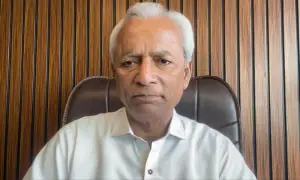
“WHO now only has enough supplies in-country to last for one week,” said Ahmed al-Mandhari, the head of WHO's Eastern Mediterranean region — stretching from Morocco to Afghanistan.
“Yesterday, 70 per cent of these supplies were released to health facilities,” he added.
Mandhari said that 500 metric tonnes of medicines and supplies stored in Dubai were unable to be delivered due to the chaotic evacuation efforts at Kabul airport which does not have the capacity to receive commercial flights.
“Countries sending in empty planes to pick up evacuees do not feel they are able to help,” Mandhari said.
Testing, vaccinations drop
The UN agency was also concerned the current upheaval in Afghanistan could push up Covid-19 infections, with testing dropping by 77pc in the past week and vaccinations also down, officials from the WHO's Eastern Mediterranean office said.
The WHO officials, in an online briefing, said 95pc of health facilities in Afghanistan remained operational but that some female staff had not returned to their posts and some female patients were now afraid to leave their homes.
After a major scaling back the WHO was stabilising its operations, said Richard Brennan, the WHO's regional emergency director.
“We have had some encouraging signs and encouraging communications, that the Taliban authorities have made it clear that they want the United Nations to stay, that they want the continuity of health services,” he said.
“We remain cautiously optimistic that we will be able to get our operation back at increasing scale over the coming weeks.”
On Sunday, the WHO and Unicef jointly called for an “immediate establishment of a reliable and robust humanitarian air-bridge to send in supplies”.
“Even prior to the events of the past weeks, Afghanistan represented the world's third-largest humanitarian operation, with over 18 million people requiring assistance,” the Sunday statement added.
US-led troops have ramped up operations to get thousands of people out of Kabul, after the Taliban warned they would not allow the United States to extend an August 31 deadline for a complete withdrawal.
About 50,000 foreigners and Afghans have fled the country from Kabul's airport since the Taliban swept into power 10 days ago, according to the US government.
Many Afghans fear a repeat of the brutal law that the Taliban implemented when first in power from 1996-2001, or retribution for working with the US-backed government over the past two decades.