2
2
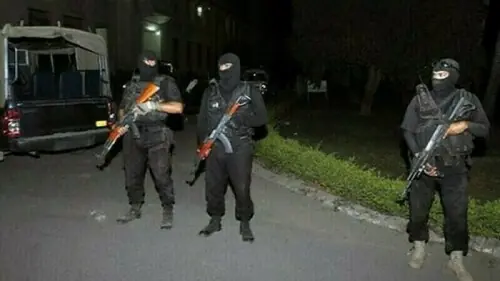
THE authorities have justifiable reason for their growing concern about the law and order situation in Balochistan. An intelligence-based operation early Wednesday in a Quetta locality killed four suspected members of the Tehreek-i-Taliban Pakistan, including a commander. On April 21, the banned militant outfit had claimed responsibility for a deadly suicide bombing in the parking area of the high-security Serena Hotel in Quetta. The attack claimed the lives of at least five people and wounded a dozen others. A resurgent TTP, amidst the turmoil in Afghanistan next door, was a very real possibility — especially after a breakaway faction, Jamaatul Ahrar, and JuA’s splinter group Hizbul Ahrar both merged with the umbrella organisation last year.
However, the last few months have seen a flurry of IED explosions of low and medium intensity for which no militant outfit has claimed responsibility. Last Monday, at least five people were injured in Quetta when a roadside bomb exploded. That came on the heels of another attack in which seven people were slain and 14 injured in a bombing that targeted a Palestine solidarity rally in the border town of Chaman. In April, an IED wounded 14 people at a football match in the town of Hub. The bombings were seemingly random occurrences, with soft targets for the most part. Balochistan has been the theatre of some horrific acts of terrorism, often resulting in large-scale casualties. In January, 11 Hazara coal miners were slaughtered in an attack claimed by the militant Islamic State group. In the run-up to the 2018 polls, a massive suicide bombing at an election rally left over 130 people dead. There was a brazen assault in May 2019 on a five-star hotel in Gwadar, the coastal city believed to be fortified against terrorist attacks. The province has long been perceived as ‘troubled’, almost by default. While most of the recent comparatively low-casualty IED explosions may give the impression that the security situation is now ‘under control’, the picture as a whole is extremely disquieting. All indications are that the province is once again becoming a staging ground for militants of various stripe. The TTP is revitalised, possibly even more so because the impending US troop withdrawal across the Afghan border affords it more operational space. The Baloch insurgents too will certainly exploit the situation to their advantage. The law-enforcement authorities cannot afford to let down their guard for even an instant at this critical juncture.
Published in Dawn, May 30th, 2021