Myanmar army declares ceasefire against ethnic rebel groups


 5
5

YANGON: Myanmar’s military announced on Friday it would suspend “all military movements” in the troubled northern and eastern regions for four months, an unprecedented step observers say could coax ethnic rebel groups into the country’s fractious peace process.
Conflicts have been festering in the border areas since independence from Britain 70 years ago, with various armed groups fighting for autonomy, identity, resources and territory.
Tens of thousands of people living within the conflict areas have been forced — often repeatedly — from their homes.
Read: Rohingya genocide still taking place in Myanmar: UN investigator
So far 10 ethnic rebel groups have signed up to a peace process led by civilian leader Aung San Suu Kyi, but several others have held out.
One key demand has been for the powerful military to lay down its weapons first, a concession it has staunchly refused — until now.
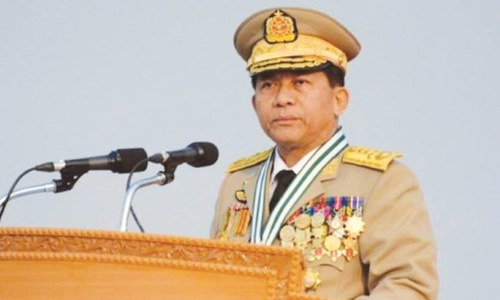
On Friday, the commander-in-chief’s office announced on its website the military would “suspend all military movements” in the northern and eastern regions.
The unilateral ceasefire will take immediate effect and last until April 30 “to enable negotiations to take place”, the statement said, adding that the army reserved the right to re-engage in conflict “if needed”.
One notable exception to the ceasefire was western Rakhine state, where an army crackdown forced some 720,000 persecuted Rohingya Muslims into Bangladesh last year, in violence UN investigators concluded warranted charges of genocide.
The military is now locked in a conflict with Rakhine Buddhist rebels, violence that has driven hundreds from their homes in recent days. Friday’s announcement was welcomed by the Taaung National Liberation Army (TNLA), one of the larger ethnic armed groups that has been fighting the military in the northeast.
“We see this as a positive step by the Myanmar Tatmadaw (armed forces),” TNLA general secretary Brigadier General Tar Phone Kyaw said.
“But it would have been better if they had announced a ceasefire for the whole country,” he said, adding that his group had called for “restraint” from its troops.
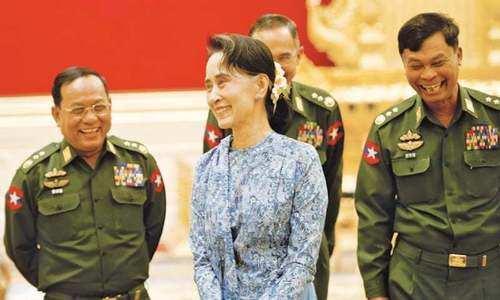
The peace process has been Suu Kyi’s stated priority since her party swept to power in landmark elections in 2015, as the country opened up following half a century of military rule.
But she has had no say over security policy, with the still-mighty military retaining key government posts in a delicate power-sharing arrangement.
The process has moved in fits and starts, with fighting continuing in many restive border areas — even between the army and some signatories of the government’s peace deal. Neighbouring China has recently mediated in several rounds of talks.
Published in Dawn, December 22nd, 2018