27
27
THE PPP has come out with an incredibly detailed manifesto promising a world of opportunity to the nation. But, two important questions come to mind; how is it different from the last two editions? And, will it this time, be put into action?
In 2008, the party laid out similar plans. It vowed decisive action on water security, poverty alleviation, labour policy reform, energy security, empowerment of women, and enhancement of the rule of law.
The 2013 document made almost identical commitments. Additionally, it also included details on how the PPP had lived up to its promises when in power. However, when it came to the polls, the electorate manifested its disagreement with all such claims as the party’s vote plummeted to half.
What it achieved was modest to say the least, and the markers of success were not met. In 2008, the PPP announced that it would build 100,000 homes for the poor, and a budget allocation was made. Nothing happened and the funds lapsed.
In its manifesto the party had declared it would ensure local government elections, but we had to wait until 2016 to see them in Sindh.
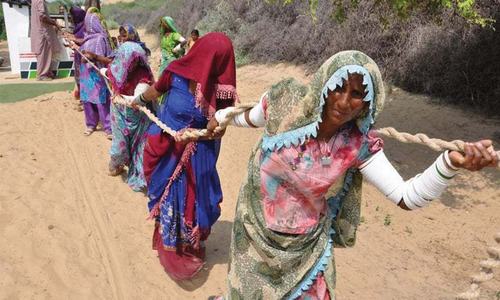
To its credit, the PPP has always spoken of empowering women, and has introduced some positive legislation towards this end. However, much remains to be done.
By 2015, it had the lowest average wage for unskilled female workers. The province also had the dubious distinction of showing the lowest percentage of employed women relative to men — 14pc to 86pc. In 2014, after six years of PPP rule, the province had the highest incidence of violence.
Meanwhile, the issue of press freedom, a growing area of concern in this country, has been given short shrift in comparison to its 2013 manifesto.
The most worrying aspect is that all three manifestos glanced over civil service reform with vague statements about even vaguer plans. Considering Asif Zardari’s guarantee of a government job for every family in the country, it suggests that there will be no reform but just a ballooning of an already bloated bureaucracy — cementing the notion of growth without development and, in the process, doing away with concepts of competence and meritocracy.
But, this time the PPP has a new face in Bilawal Bhutto-Zardari. Would he, somewhere in the future, be able to claim that the PPP will transform Lahore into Karachi, without it sounding more like a threat? Will he be able to deliver on his promises? For as Carl Jung put it, “you are what you do, not what you say.”
Published in Dawn, July 2nd, 2018