28
28
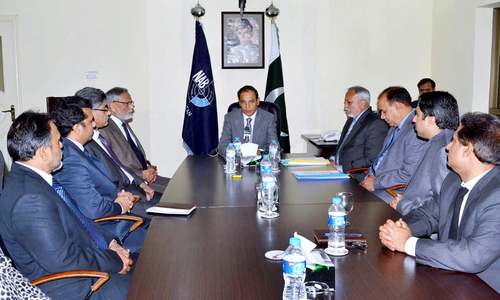
NOBODY likes accountability and ferreting out traces of corruption in government affairs, but given the sad realities of our country, it is an indispensable task.
In some form or the other, constant vigilance over government conduct is required by a strong and independent body empowered to detect, investigate and prosecute corruption wherever it may be found.
Also read: Sharif threatens to clip NAB’s wings
But unfortunately, this is not the only sad reality of our country. In the past, hunting down corruption has taken on a political hue and, on many occasions, the exercise has been selective.
The result is that it is difficult to tell when the National Accountability Bureau is actually pursuing a corruption investigation and when it is allowing its strings to be pulled from the shadows for the purpose of settling political scores.
Today, we have a situation where everybody is annoyed with NAB, the prime minister and the chief ministers, which means they might be doing something right, or perhaps the anti-corruption bureau is drawing its strength from Rawalpindi.
That question will be hard to answer in the absence of strong evidence one way or the other.
What is not hard to see, however, is that those indulging in criticism have no alternative suggestions on how to institutionalise accountability in Pakistan. Keeping accountability under governmental control has aggravated the politicisation of corruption allegations in the past.
In 2004, for instance, NAB famously issued a clean bill of health to the PML-Q leadership while continuing to pursue cases against the opposition leaders.
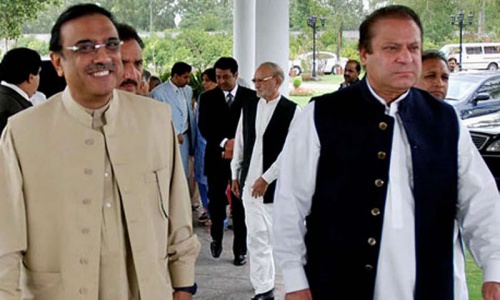
And who needs to be reminded of how the Ehtesab Bureau acted during the last Nawaz Sharif government in the late 1990s? Even today, evidence of how corruption has become a political football is in painfully high supply.
The PTI, which only recently reformed its own accountability law in KP in an apparent move to clip the powers of the Ehtesab Commission, is assailing the PML-N over the prime minister’s statement that NAB is harassing civil servants and serving as an obstruction to the completion of important projects.
The PPP too seized on the prime minister’s outburst and momentarily forgot its own complaints against the heavy-handed exercise of accountability powers.
The parties need to agree amongst themselves on how to institutionalise accountability in the country, then allow the process to operate.
A truly independent accountability set-up is needed, with its head being chosen by consensus, perhaps along the lines of the ECP.
Stronger rules are also required on what conditions are necessary before an inquiry can be initiated. Above all, a consensus needs to be built on how accountability will proceed in the country, and its writ needs to be respected.
It is an unseemly sight when political parties rally around NAB as it goes after their opponents, and then start to cry foul once it begins to go after them.
Published in Dawn, February 18th, 2016