0
0
LONDON, June 15: Tesco, the world’s No 3 retailer, has stopped sourcing clothes from a factory in Bangladesh after discovering serious problems with the safety of a building, the company said on Saturday.
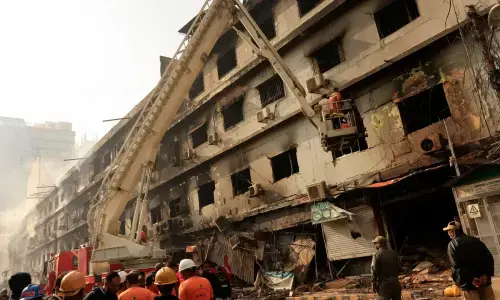
The move follows a survey the British-based supermarket chain conducted in the wake of the collapse of the Rana Plaza factory complex in Dhaka in April that killed 1,129 people.
“A structural survey of a site we source from in Bangladesh, owned by Liberty Fashions, has revealed serious problems with the safety of one of the buildings,” Tesco said in a statement.
“We immediately made the owners aware of our findings, and tried to find an alternative to ceasing production of Tesco products on this site. We are disappointed that this was not possible... “Our concerns about the structure of this building are so serious that we decided our only option was to stop taking clothes from this site with immediate effect.”
Tesco, which has promised to conduct structural surveys of all the factories it sources from, said it had urged the owners of the site to stop all production and to evacuate the premises to ensure the safety of its workers.
It had also informed the relevant authorities, other customers of the site and the Bangladesh Garment Manufacturers and Exporters Association (BMGEA) of the survey results and its decision to stop sourcing from the site. The retailer said it had stopped using 15 factories of concern in Bangladesh in the past 12 months.
Bangladesh has pledged to improve safety in the garment industry after the Rana Plaza collapse but has not pledged any new money to relocate dangerous buildings.
The collapse of Rana Plaza, a factory built on swampy ground outside Dhaka with several illegal floors, on April 24 ranks amongst the world’s worst industrial accidents and has galvanised brands to look more closely at their suppliers.
Very low labour costs and, critics say, shortcuts on safety, makes the country of 160 million the cheapest place to make large quantities of clothing.
Companies are split over how to improve conditions. Big European names have signed an accord that would make them legally responsible for safety at Bangladesh factories. US firms like Wal-Mart Stores Inc have broken ties with non-compliant factories.—Reuters