War risk, freight surge cloud trade outlook
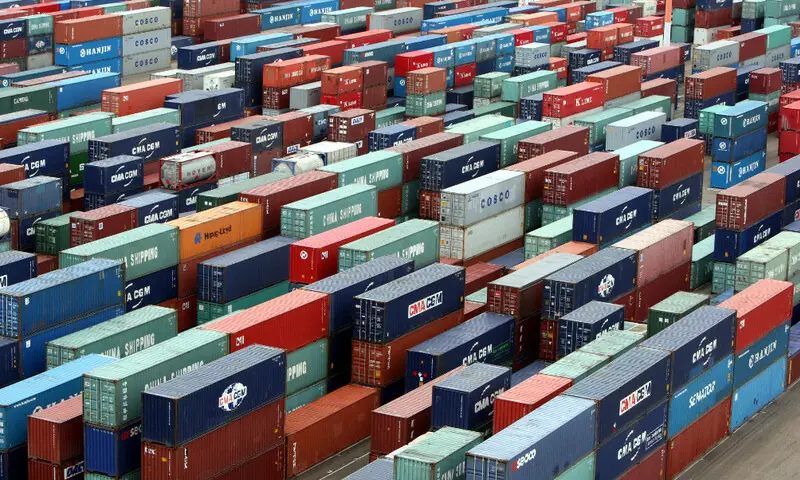
KARACHI: Industry stakeholders have expressed mixed views on supply chain risks linked to imported raw materials following the imposition of an illegal war by the US-Israel on Iran, with some saying there is no immediate threat of shortages due to adequate inventories but warning that soaring freight and war risk charges pose a serious challenge for future trade.
Commodity traders, however, claim that many of their members have temporarily suspended import and export activities until freight and war risk premiums stabilise.
President of the Pakistan Pharmaceutical Manufacturers Association (PPMA) Tauqeer-ul-Haq said the pharmaceutical industry faced no serious supply disruption as most of its raw materials were imported from China. He added that the sector typically maintains raw material inventories sufficient for five to six months.
Jawed Bilwani, a representative of the value-added textile sector and former chairman of the Pakistan Hosiery Manufacturers Association (PHMA), said the industry also sourced a significant share of raw materials from China. However, he noted that freight rates had surged by more than 100 per cent, while a Rs55 per litre increase in diesel prices had pushed up transportation costs.
The value-added sector usually maintains raw material stocks for two to three months and places fresh import orders when stocks fall to around one month, he said. Industries holding only one month’s inventory could face difficulties if they delay reordering due to high freight costs.
Industry leaders warn higher logistics costs threaten future imports and exports.
To reduce the cost of doing business, Mr Bilwani urged the government to cut motorway and highway toll rates by 50pc, offer freight subsidies to exporters, facilitate import shipments from China through land routes, ensure uniform terminal operator charges and abolish taxes on fuel prices.
President of the North Karachi Association of Trade and Industry (NKATI) Faisal Moiz Khan said the escalating conflict had severely disrupted shipping via the Strait of Hormuz, through which around 80pc of Pakistan’s crude oil imports transit. Combined with the Red Sea crisis, this has halted or rerouted shipping, pushed up global oil prices and driven freight costs higher.
He warned that delays could emerge in imports of chemicals, fertilisers, polymers and other essential inputs. “Industry has warned of a 10-20pc drop in exports, particularly in textiles, in March, while higher import costs could worsen the trade deficit and balance of payments position,” he said.
Many sectors were operating with tight inventories — often only 15 to 30 days for critical items — raising the risk of shortages or production disruptions if the situation persists, Mr Moiz added.
Freight and war risk charges have risen sharply, with container rates on routes such as Shanghai-Jebel Ali climbing from about $1,800 to more than $4,000 per 40-foot container, he said. Shipping lines are also imposing emergency surcharges of $1,500 to $3,500 per container along with war-risk premiums, in some cases rising more than tenfold, increasing logistics costs by 15-30pc and adding to inflationary pressures.
He further said local transport fares had increased by 15-20pc for buses, goods carriers and rickshaws, pushing up prices of food and other commodities during Ramazan and raising business costs while squeezing household budgets.
Higher energy and import bills could strain foreign exchange reserves, currently around $16 billion, widen the current account deficit, revive inflationary pressures and dampen economic growth, Mr Moiz warned. A prolonged Middle East conflict could also trigger balance of payments risks despite stable short-term fuel stocks.
Karachi Retail Grocers Association (KRGA) Chairman Rauf Ibrahim claimed that imports and exports of commodities had been temporarily suspended due to a surge in freight rates. However, he said there were no shortages of edible items. He urged the government to strictly monitor hoarding and black-marketing and take steps to control prices.
Fertiliser Manufacturers of Pakistan Advisory Council Executive Director retired Brig Sher Shah Malik said the local industry maintains a strategic sufficient inventory of approximately 0.9 million tonnes of urea to support the supply chain for the upcoming kharif season, provided gas supply to fertiliser plants remains uninterrupted. This domestic buffer not only ensures the availability of essential inputs for farmers but also protects national food security by stabilising production costs and sustaining agricultural output during periods of global market turbulence.
However, DAP supplies are likely to be impacted if the Gulf crisis is prolonged, as Pakistan’s only plant, Fauji Fertiliser Bin Qasim, produces 50pc of the national requirements, he said.
The Middle East tension has disrupted the global fertiliser supply chain, exposing the vulnerability of countries dependent on imports, he said, adding that the halt in Qatari gas supplies — an essential feedstock for ammonia production — combined with the closure of the Strait of Hormuz, a critical maritime route for fertiliser trade, has sharply constrained global availability of urea and related inputs.
As Gulf producers collectively account for roughly 30pc of global urea exports, the supply shock has pushed international urea prices to near-record levels of approximately $740-750 per tonne.
“In Pakistan, local production effectively insulates the domestic market from extreme international price fluctuations,” he said, adding that currently, domestic urea prices remain around Rs4,400 per 50 kg bag versus potential import parity levels estimated between Rs13,700-14,700 per bag under prevailing global conditions.
Federation of Pakistan Chambers of Commerce and Industry (FPCCI) Senior Vice President Saquib Fayyaz Magoon said the sudden suspension of vessel operations to the Middle East had brought export logistics to a standstill, causing huge losses to the exporters.
Exporters had already moved their consignments to the ports in line with shipment schedules, but with vessels no longer calling, terminal operators were now asking exporters to retrieve their containers. “Bringing containers back to the factories and then returning them to the port later would result in massive additional costs, which many exporters simply cannot absorb,” he said.
Mr Magoon urged the government to immediately announce a minimum 30day special relief window at all ports and to fully waive demurrage and detention charges in view of the extraordinary situation.
Rice consignments have been particularly affected. Profit margins in the rice export sector are already narrow, and any forced offloading of containers and retransportation of goods back to warehouses would sharply increase handling and logistics costs, resulting in heavy financial losses for exporters, he said.
Published in Dawn, March 15th, 2026