ISLAMABAD, June 19: Pakistan’s economy has suffered direct and indirect losses of up to $67.93 billion since 2001 due to its role as a frontline state in the ‘war against terrorism’.
According to the Pakistan Economic Survey 2010-11, the events that transpired in Afghanistan after the 9/11 attacks in the US adversely affected the security situation in Pakistan.
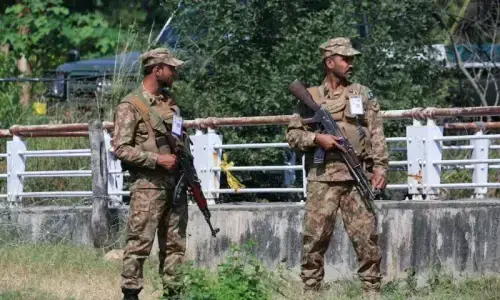
Particularly since 2006, the war on terror has spread like a contagion into settled areas of the country and has so far claimed the lives of over 35,000 civilians and 3,500 security personnel.
The survey said the war had affected the country’s exports, prevented foreign investment, hampered the privatisation programme and slowed down the overall economic activity.
It reduced demand for imports and tax collection, caused an expenditure overrun on additional security spending, damaged the tourism industry and destroyed military and civil physical infrastructure.
“Pakistan has never witnessed such a devastating social and economic upheaval in its industry, even after dismemberment of the country by a direct war,” the survey said.
It said hundreds and thousands of jobs could have been created had economic activity not slowed. Thousands of jobs were lost because of the destruction of domestic and foreign tourism and increase in expenditure to support displaced people.
“Pakistan’s investment-to-GDP ratio has declined from 22.5 per cent in 2006-07 to 13.4 per cent in 2010-11 with serious consequences for the job creating ability of the economy.”
In 2008, the ministry of foreign affairs set up an inter-ministerial committee to assess the direct and indirect cost of the war.The ministries of finance, interior and commerce, some other relevant government departments and representatives of the two provinces bordering Afghanistan participated in the deliberations.
“The economy was subjected to enormous direct and indirect costs which continued to rise from $2.669 billion in 2001-02 to $13.6 billion by 2009-10, projected to rise to $17.8 billion in the current financial year and moving forward, the direct and indirect costs to the economy are most likely to rise further,” the survey said.—APP