0
0
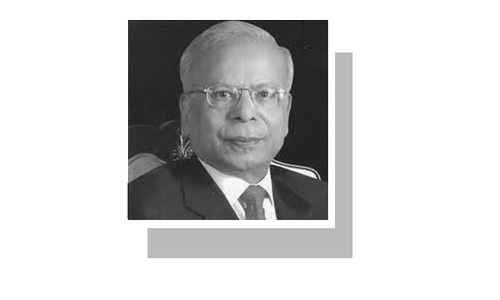
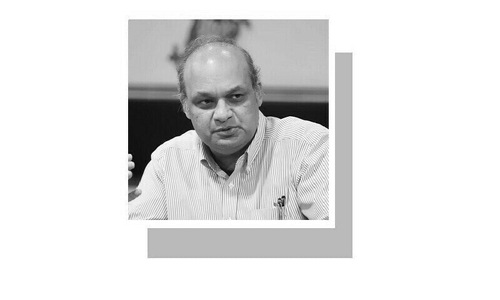
THE slogan of Gallery 6 is ‘increasing art lovers and collectors’. Since it was the sixth art gallery to open in Islamabad - after Rohtas, Khaas, Nomad, Tanzara and Jharoka – it was named Gallery 6! The owner, Dr Arjumand Faisel, is very happy with the response since it started functioning in March 2008.
Gallery 6 is located in Islamabad’s G-9 sector. It has a capacity to exhibit over a hundred paintings at a time, with paintings belonging to well known artists like Sadeqain as well as relatively unknown artists – “as long as the work is good!”.
Who decides what art is good? The curator of course! But how can a medical doctor know so much about art? Read on and find out, but first, how did he become a doctor?
Dr Arjumand Faisel, MBBS, MCPS, MPH, FCPS, received his MBBS degree from Dow Medical College, Karachi and worked in Agha Khan Hospital. He has a Masters degree in Public Health from USA. He has also worked with USAid and WHO. A specialist in public health, he is also a consultant on health issues in Islamabad and regularly conducts workshops on various health and medical issues.
He became a doctor only because of his father’s insistence. After that, he followed his own passion for the arts. “If your passion is strong enough, your destiny helps you.”
Arjumand’s home was in PECHS, near Ali Imam’s Indus Gallery. Ahmed Pervaiz and Jamil Naqsh lived nearby too. Bashir Mirza’s gallery was there too. All of them got together in Ali Imam’s place at least once a week.
Arjumand says, “As a young man I’d go and listen to them. Ali Imam started noticing me. Next day of any exhibition, he would often ask me how it was. We would stand in front of a painting and he would ask me, ‘how is it?’ Then he would tell me what I have not seen, scanning the entire painting inch by inch.”
Prior to 2000, Arjumand had a gallery in Karachi called Zeena - the art workshop. Arjumand was helping someone else set up an art gallery in Islamabad, and when problems emerged, Gallery 6 was the outcome! The gallery has so far held 24 exhibitions in two years, with a great response from people from all socio-economic levels.
In April 2008, Arjumand organised a show of leading Pakistani painters at the East-West Centre Art Gallery in Hawaii, titled ‘Unseen Visions’.
Since January 2010, he has also made presentations entitled ‘Journey of paintings in Pakistan 1947 – 2010’ in schools and at the Islamabad Rotary Club.
“We have introduced many artists here, e.g. Shehla Rafi who previously had never exhibited in Pakistan. Another good artist is Omar Farid. We also held the first exhibition of Akram Spaul, who had been painting since 1970. We also promoted bill board painters as they were out of work. We asked them to do eight to 10 feet-big paintings, and also got them to work on smaller canvasses.”
When asked what his highest achievement was, the doctor paused and answered, “One initiative that I feel very happy about is the Ward Fund Project. When I was a medical student in Dow, on my first clinical day, a young boy brought another boy who was in a coma (they were in early 20s). My professor diagnosed it as Tuberculosis Meningitis. The boy in coma needed daily injections for three months. The friend who brought him started crying. He said they had come from East Pakistan. The family of the boy in coma had died. His own father too was dead and he was supporting his family. He said he’d have to make a choice between getting injections for his friend or feed his family.”
Arjumand and his friends decided to collect money for the needy from that day on. “We realised that there will be many more of such people in need. There were 30 wards, 10 students to each ward. So I announced in class, that anybody who needed medicines or anything else should write down their requirements and they’d be provided. From that day onwards, we started collecting funds. Our union agreed to patronise it. We were able to fund patients in the entire hospital. We collected from people all around us. The accounts were transparent. Now this is spread all over Pakistan. It’s called Patients’ Welfare Association.”
Having completed his father’s dream to have a son who is a doctor, he is now fulfilling his own dream. “My dream was to be a film director. I’m a theatre person, and I’ll get back to it. I enjoy acting on stage. I need to excel in one thing at a time. Now I’m focused on art, paintings basically.”
“I wrote a book, Tanao ki Deewar (the wall of tension). When communication breaks down, walls appear. A small lapse in communication affects relationships - whether social or family. For me the most important thing in life is good relationships. When it comes to talking with people, I do one thing at a time.”
Thus, during the interview, his phone was off. That’s the secret of his success – complete focus on the work at hand. He believes that “a distributed mind cannot focus on one thing”.
Arjumand’s next venture? An exhibition in Griffith, Australia. So far he has held four solo exhibitions - in Islamabad as well as in Lahore and Karachi. His style of painting is abstract expressionism.
“I think it’s honesty with any work that you do that matters. You should know how much you know, and admit it. Once you realise that, only then you can improve. Know your limitations and face them. I learnt this from my teachers.”
Arjumand’s mentor in medicine is his teacher, Camer Vellani, who said, “Unless you ask, you’ll never learn.” Ali Imam and Rashid Arshad are his mentors in art. And his mentor in human interaction? Aslam Azhar.
How can Pakistan improve? Arjumand believes all of us must try to bring the change within our own sphere. ‘Har Simt mahaz hai yeh’ was a television programme he hosted in 1970 at the age of 17. It meant we are fighting a battle at every front. “Within our own sphere, we must do our own work well; we must follow Hazrat Muhammad (Peace Be Upon Him), and we must give respect to others. I can only change my own environment. Just give your best in your own circumstances.”
His message to the youth? “They should only think what they can influence, and leave the habit of lying. Agree you have failed, admit mistakes, and correct them. Until then, you can’t improve. Actions speak louder than words.”