0
0

INDIGENISATION is the core of the policy for power generation projects -2002. It includes local fabrication of power plants as an important feature.
“Financial and Fiscal Regime” of the policy lays emphasis on use of indigenous machinery, equipment and accessories, explicitly stating: “ maximum indigenisation shall be promoted.”
Consequently, the policy allows concessions from custom duties etc on imports related to power projects, either in public or private sector, only in case the goods are not manufactured domestically.
Furthermore, “features of the power policy” highlight: “ to promote indigenisation, the local engineering industry will be encouraged to form joint ventures with foreign companies in order to develop power projects with a cumulative capacity of at least 2,000 MW by the year 2015.”
Energy sector action plan approved by the president is also focused on optimal use of indigenous resources of fuel as well as that of machinery.
In practice, however, nothing concrete has been achieved in this direction. Unfortunately, the local industry has not come forward to avail the opportunity offered under the policy or to exploit new business potential in the emerging domestic power equipment market.
The Private Power and Infrastructure Board (PPIB) has not yet received a single proposal for developing the projects out of total capacity of 2,000 MW, which has been allocated to local industry under joint venture arrangements.
At the same time, the project sponsors and their engineering, procurement and construction (EPC) contractors are reluctant to place order for locally produced machinery for the respective power projects, resorting freely to imports of almost cent per cent required plant machinery items.
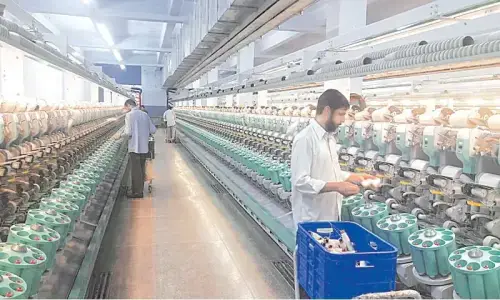
A reasonable engineering and manufacturing base for the production and supply of machinery and equipment for power plants, which is capital and skill intensive in nature, exists in the country.
The industry, in public and private sector, is currently in a position to achieve indigenisation level to the extent of 30-35 per cent by value and much higher by weight, for various power projects.
Many industrial units have the facilities to deliver mechanical and electrical equipment, at competitive prices and of international quality.
Their dozens of engineers and technicians have been trained in Germany, Japan and China to keep abreast with the latest manufacturing techniques and quality control procedures specifically related to power plant equipment.
The manufacturers have the qualification of prestigious American Society of Mechanical Engineers (ASME) stamps for the power boilers, pressure vessels and pressure piping. HMC has produced equipment for 210 MW thermal power plants installed in Karachi in recent past in collaboration with Hitachi (Japan) and Deutsche Babcock (Germany).
The equipment supplied by the domestic companies to thermal power projects, mainly to Water and Power Development Authority (Wapda) and Karachi Electric Supply Corporation (KESC), includes utility boilers, steam condensers, vessels and tanks, heat exchangers, pumps, cooling towers, ducts and piping, cranes and steel structure. In addition, a number of spare parts have been produced to meet emergency demands of power stations.
Equipment and components have also been supplied to hydroelectric power stations. The list of supplies include a variety of electrical equipment such as transformer, switchgear, control panels, cables etc., besides other mechanical equipment and accessories of a power plant.
Since each project has to be designed and engineered according to selected technology, configuration and site conditions, the technology for major equipment, however, has to come essentially from foreign sources.
To encourage use of goods produced in the country, the Central Board of Revenue (CBR) notifies, and regularly updates, the list of such machinery, materials and intermediary items, under the Customs General Order.
The latest CGO No. 10 of October 7, 2003, covers machinery and equipment, indicating comprehensive list of design and engineering services and machinery and equipment available locally for various industrial sectors including energy.
There are however structural weaknesses in the institutional and regulatory framework and other constraints that hamper promotion of optimal indigenisation of machinery and equipment.
Implementation of Power Policy 2002 is already a success story. Proposals for setting up as many as 45 projects, with a cumulative gross capacity of over 13,800 MW, at an estimated total investment of $13 billion, are either in the pipeline for construction or under active processing by the PPIB.
These include four thermal power projects of total 800 MW capacity that are in advanced stage and for which letters of support (LOS) have been issued, whereas letters of interest (LOI) have been issued for fast track projects, including capacity expansion of existing Independent Power Producers (IPPs), to add 1,200 MW total capacity to the system.
Many other new thermal, gas- and oil-based, power projects of cumulative capacity of 3,388 MW have already been allowed for setting up countrywide.
In addition, power projects based on Lakhra and Thar coal resources, as well as on imported coal, with cumulative capacity of 1,550 MW are under consideration. Likewise, it is planned to create a total of 5,720 MW capacity additional hydro power generation in private sector.
Consequently, various hydro projects are at different stages of processing. Expressions of interest (EoI) for another seven hydroelectric power projects, with a cumulative capacity of 1,620 MW, have recently been invited. Proposals have also been received recently by the PPIB for expansion of Tarbela hydel power station by 960 MW.
Effective and meaningful participation of local engineering industry is possible in these forthcoming power projects. Indeed the initiative has to come from the engineering industry, preferably on a collective basis.
There may be a need for financial and fiscal incentives to be extended to engineering industry in order to embark upon manufacturing of machinery for power plants of various types and technologies in a big way and on a sustainable basis.
The industry will also require balancing, modernisation, rehabilitation and expansion (BMRE) of its existing facilities, under a phased programme, to achieve optimal indigenisation of plant machinery.
The government should devise ways and means to promote indigenisation, within the provisions of the Power Policy, but without compromising the interest of the entrepreneurs.
These measures will aim at overseeing that not only a substantial share of orders for manufacturing and supply of machinery is obtained by the local industry, but also the opportunity to assimilate requisite modern technology is availed fully by the local industry.
On the other hand, it will provide momentum to the cherished goal of self-reliance, resulting in contributing largely towards import substitution, besides reduction in capital cost and variable operation and maintenance (O&M) cost of the plant and deriving numerous benefits of standardisation.
In view of the foregoing, it shall be desirable that the Engineering Development Board (EDB), which is mandated to strengthen engineering sector, may take initiative to suggest various measures to be adopted by the government for the promotion of indigenisation of power plant machinery. This should essentially be aimed at encouraging technology transfer arrangement, in accordance with the provisions of the Policy 2002, which in essence is investor-friendly.
The global power equipment manufacturers are large and powerful multi-national companies, and without the involvement of the government, they would not agree to the idea of progressive indigenisation of machinery.
This may be the most opportune time for the EDB to propose extending concessions and benefits to local engineering industry within policy framework, as the government intends to make extensive revisions in the Policy 2002 and plan to announce policy for development of renewable energy for power generation during this month.